
How Often Should a Commercial Fleet Be Washed? What Changes It
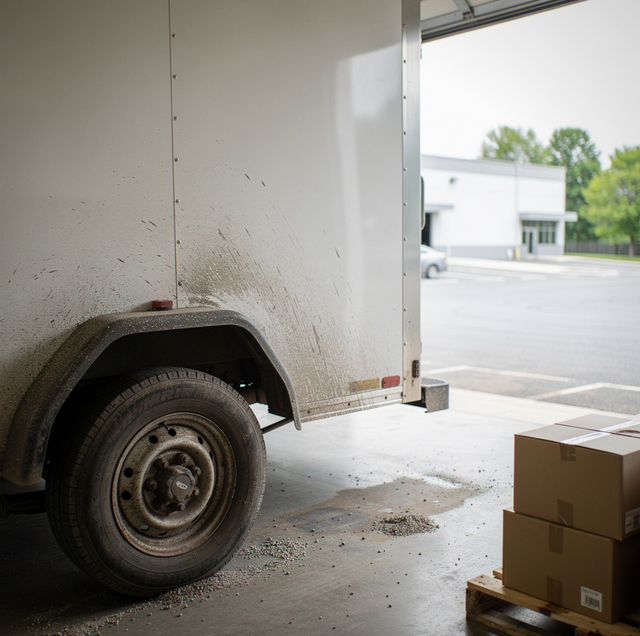
Every fleet manager eventually asks a version of the same question, and it rarely has the tidy answer they were hoping for. A box truck running a delivery loop through stop-and-go traffic five days a week and a company sedan that sits in a lot four days out of seven accumulate grime at completely different rates and on completely different parts of the vehicle.
A useful interval comes from what your vehicles are exposed to between washes, not from a number pulled off a generic schedule. Once you know which stressors are working on your fleet and how quickly each one does its damage, the frequency stops being a guess and starts reading like any other line on the maintenance sheet, sitting beside tires and oil.
What Builds Up on a Working Vehicle Between Washes
Road film is not dust. It is a thin, oily layer built from exhaust soot, tire and brake wear, unburned fuel residue, and mineral grit thrown up off the pavement, all of it bound together by moisture and then baked onto the panel by a warm engine and a day of sun. That mixture grips painted metal far harder than the loose dirt a garden hose can move.
Brake dust behaves differently again. Every stop sheds fine iron particles from the pads and rotors, and those particles land hot on wheels, lower panels, and the back of a box body. Iron on a wet surface begins to rust where it sits, and the rust bonds into the clear coat as a rash of orange specks that no amount of pressure will lift once it has really taken hold.
Two different problems grow out of the same film, and they run on separate clocks. One is appearance: a fleet is a rolling advertisement, and a van coated in road salt, exhaust deposits, and grime makes a poor impression on the customer standing next to it. The other is corrosion, which those same deposits can accelerate over time, and that one stays invisible until a brake line or a rocker panel gives up, and by then you are replacing hardware, not cleaning it.
How Often Do Working Fleets Get Washed?
A commonly cited guideline for salt season gives a floor rather than a target, worth reading in full: wash regularly, at least every two weeks, more often after driving on heavily salted roads. Two things stand out in that guidance. It is a floor and not a target, and the escalation clause is tied to exposure, not to the calendar. A vehicle meeting the harsher condition earns the shorter interval.
That guidance is written for a private car, and a working fleet sits on the harder side of every variable. A route vehicle can cover in three days what a commuter covers in two weeks, and it does that mileage in traffic, behind other vehicles, at the height where spray off the road lands hardest. Fleets that hold a steady appearance tend to run on a weekly or two-week rhythm for exactly that reason.
The same reasoning already appears in the way this trade builds intervals for buildings. For a warehouse floor, the honest answer is that it depends on the type of facility and the level of activity: high-traffic production and distribution floors typically benefit from quarterly or bi-annual professional cleaning, while administrative warehouse space may only need an annual clean. Vehicles work the same way, one duty cycle at a time.
What Moves the Interval Up or Down
Route shape does more to the interval than mileage alone. A highway van collects a fine, even road film across its whole flank, heavier in wet months when spray carries grit up the side. A city vehicle on a stop-start loop collects less film and far more brake dust, packed onto the wheels and the lower third of the body. What the fleet hauls matters too: a landscaping trailer, a construction pickup, and a refrigerated box body each leave their own residue on the surfaces around the load.
Then there is the surface itself, because the interval is really a question about the weakest finish in your fleet. Factory clear coat tolerates film for a while before it dulls. A vinyl wrap or a cut-vinyl decal is a different material with seams and edges, and acidic film settles along a lifted edge, working underneath where no wash reaches. Polished aluminum wheels stain from brake dust faster than paint does, and a fiberglass box body chalks under sun once the film holding moisture against it stops being rinsed away. Build the interval around whichever of those reaches its limit first, rather than around the panel that looks worst.
That gives most fleets two intervals rather than one, and they rarely land on the same date. The appearance interval is short, driven by what a customer sees when a driver pulls into their lot. The protection interval is longer and less forgiving, driven by what the film is doing to metal, wrap edges, and the underbody while nobody is looking. A fleet washed only when it starts to look dirty is running the first interval and ignoring the second entirely.
What Sits Underneath
The part of a vehicle nobody inspects is doing the worst of the aging. Road salt, applied to improve traction on icy roads, can also accelerate rust on a vehicle's undercarriage. Salt is the sharpest version of the problem, but road spray, mud, and brake dust pack into the same frame rails and wheel wells every month of the year.
An underbody rinse is a separate line item on a fleet wash, not something a top-down pass covers by accident. Standard fleet-care guidance puts undercarriage attention immediately after frequency, and adds a rinse before washing to flush loose salt off the paint. On a fleet, that step is protecting brake lines and suspension mounts long before it ever protects appearance.
Water from a pressure wand can break the skin and drive contamination beneath it, so underbody and wheel-well passes are for a washing crew behind containment mats.
Turning an Interval Into a Standing Schedule
Where the washing happens shapes what interval you can actually keep. On-site fleet washing is possible depending on access, water supply, and space, and those three factors determine feasibility: room to move around each vehicle, a water source that keeps up with a pressure unit, and a surface a crew can work on without flooding the bay next door.
Recurring fleet contracts exist for this reason. A standing visit removes the weekly judgment call about whether the vehicles look bad enough yet, and it keeps each visit short, because a two-week film comes off with dwell time and low pressure while a three-month film needs chemistry, agitation, and far more stall time per vehicle. The interval you hold is really a stall-time decision.
A crew building your schedule will ask what the vehicles do instead of what they are. Miles per week, route type, overnight parking, wrap or paint, and whether anything in the fleet carries a food, medical, or municipal appearance standard. Those answers produce a first interval, and the first few visits correct it.
That correction is easy to make if you look at the right moment. On the next wash your fleet is already due for, walk one vehicle with the crew while it is still wet and note where the film held on and where it came away clean. That reading, not the calendar you started with, dates the visit after it.
Frequently Asked Questions
Usually, and the reason is dew, not daylight. Overnight condensation rewets the film already on your panels and lets it work on the finish for hours. Vehicles you park under trees collect sap and droppings as well, both of which can etch clear coat within days in warm weather. Indoor parking slows all of that for you.
A wrap is laminated film with seams, and every seam is an entry point. A crew keeps the wand angled along your panel and away from cut edges, works your door jambs and decal borders by hand, and drops pressure near any corner that has lifted. Once a wrap takes water underneath, it bubbles, and no rewash you book will ever flatten it.
Rarely, and the mileage number you are looking at is misleading here. Stop-start driving sheds more brake dust per mile than highway running does, and short trips never get the underbody warm enough to dry, so moisture and grit sit against your frame between shifts.
Film that has bonded stops responding to pressure and starts needing chemistry and dwell time. Embedded iron specks may need their own separate step before anything else touches your panel. In practice, you have each vehicle off the road longer on the catch-up visit than you would have with several routine visits throughout the quarter.
In most cases, the work can happen where your vehicles already park. It turns on access, water supply, and space, so what you send first is fleet size and location, and the logistics get worked out from there. A yard too tight to circle your box truck is the usual limit.
They follow a slower one, because the mechanism is different. Warm, humid conditions combined with constant water exposure create ideal conditions for algae, moss, and marine growth on dock surfaces, and regular cleaning, typically once or twice a year, prevents the buildup from becoming a structural concern or a slip hazard. Growth like that returns on a seasonal cycle that you can predict, while road film is deposited every day a vehicle is out, which is why your docks are counted in visits per year, and your fleet is counted in weeks.
Ask for a fleet washing interval built around your routes and vehicles — a recurring visit keeps every van, box truck, and company car on one predictable rhythm. Superior Power Washing serves Waldorf, La Plata, and Clinton. Call (240) 901-4252.
