
When Roof Algae Becomes Urgent vs When It Is Still Cosmetic
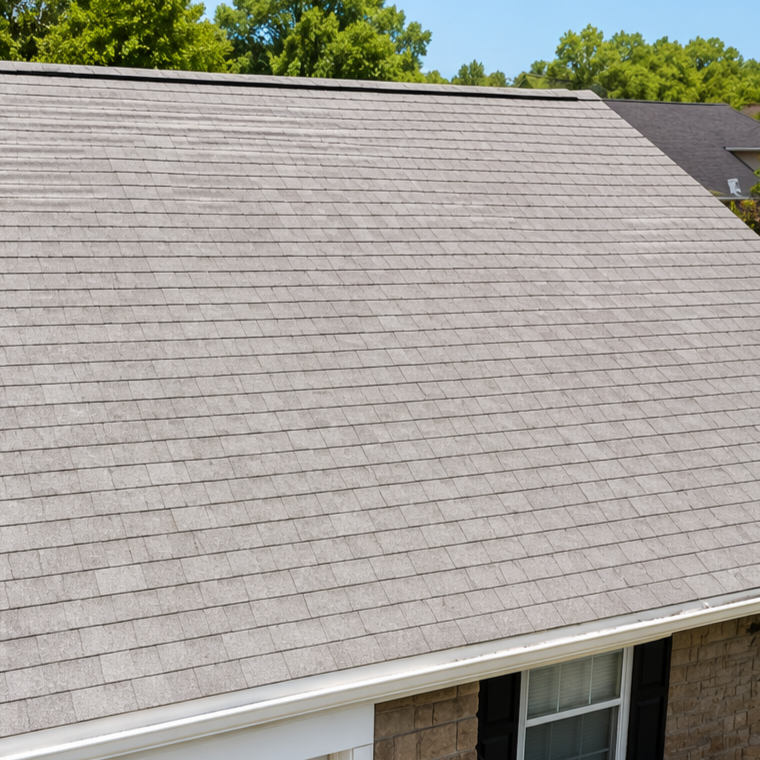
You pull into the driveway one evening and the late sun is hitting the north slope at the right angle. There it is — a dark streak running down toward the gutter, three or four shingle courses wide. Wasn't there last fall. Or it was, and you didn't notice. Either way, it's there now.
The question almost every homeowner asks next is the wrong one. They ask: can I leave it for a while?
The better question is: is this still cosmetic, or has it crossed the line into damage?
Because the answer changes everything about timing.
Cosmetic algae and damaging algae look almost identical from the driveway
The black streak you see is Gloeocapsa magma — a cyanobacterium that lives off the limestone filler in asphalt shingles. From the curb, every infestation looks the same: dark vertical streaks, usually worse on the north side.
What's different is what the algae is doing underneath. On one roof, it's still in early colony phase — alive, spreading, not yet damaging the shingle. On another, the same-looking streak has been there for years and the colony has worked under the granules and started chewing through the asphalt mat. Same look. Different problem.
You can't tell from the driveway. A trained eye can almost always tell from the gutters and the splash zone.
The six stages of a roof algae problem — find yours
The color of the streak barely changes from one stage to the next. What changes is what the streak sits next to, and what shows up in the gutter splash. Walk through the stages in order. The first one you can't rule out is the stage your roof is at.
Stage 1 — light gray haze. A soft gray cast on the north slope, no defined streaks, no sharp edges. Early colony, surface only, not anchored into the granule layer. Cosmetic. Plan for it this year, no rush.
Stage 2 — defined black streaks, sharp edges. Streaks 1–3 courses wide, clearly bordered, dark enough to read from the curb. Established colony, embedded in the granule layer, producing pigment. Soon — within six months.
Stage 3 — streaks plus color loss at the edges. Black streaks with a halo of duller, thin-looking shingle around them. The colony is releasing acids that loosen granules from the asphalt. Urgent. Within sixty days.
Stage 4 — streaks plus green or rust-orange edges. Black streaks with mossy tufts or rust patches mixed in along the edges or in the valleys. Moss is taking hold alongside the algae, and moss roots lift shingles. Urgent. The roots are the problem, not the color.
Stage 5 — granules in the gutter splash. Shingle-colored grit in the splash pattern below each downspout, sometimes a small pile at the ground. The roof from up there still looks like Stage 2 or 3. Granule loss is already happening, and UV is hitting bare asphalt. Same season — call now.
Stage 6 — sagging or wavy areas under the streak. A visible dip, soft spot, or wave in the roof line directly under the heaviest streak. Algae has held moisture against the deck long enough that the deck itself is rotting. Emergency. Water is already getting in.
Why granule loss is the line that matters
Asphalt shingles are built in three layers: a fiberglass mat, asphalt on both sides of it, and crushed mineral granules pressed into the top asphalt while it's still hot.
The granules do two jobs. They color the shingle. And they shield the asphalt from UV — the single thing that ages a roof faster than anything else.
Algae doesn't eat asphalt. It eats the limestone used as filler in the granules. The granules around the colony loosen as their bond weakens, wash off in heavy rain, and collect in the gutter and the splash zone below the downspout. The asphalt underneath is now exposed to direct UV.
A shingle that's lost its granule layer over a streak ages three to four times faster than the rest of the roof. That section fails in five to eight years instead of fifteen to twenty. The damage is permanent. Granules don't grow back.
So the line between cosmetic and damaging isn't whether the algae is there. It's whether granules are coming off because of it. Once you see grit in the gutter splash, the clock has started.
What the algae is costing you besides shingles
Two side effects of a streaked roof show up where you don't expect them — on the utility bill and on the calendar.
Cooling cost first. The streaks are darker than the surrounding shingles, the darker color absorbs more solar heat, and the heat moves through the attic and adds load to the air conditioner. Upstairs bedrooms run warmer than they should on hot afternoons. Over a heavily streaked roof through July and August, homeowners often see a noticeable drop in the bill after a soft wash.
Then there's lifespan. An asphalt shingle roof in this climate is designed for twenty to thirty years. A clean roof lands at the top of that range. A roof with persistent algae and granule loss lands at the bottom — fifteen to twenty before it comes off.
The math gets sharper with dollar signs. A typical asphalt-shingle replacement in this region runs $9,000 to $20,000 depending on size, pitch, and tear-off. A soft wash cleaning is a small fraction of that. Cleaning a cosmetic-stage roof every two to four years to push the replacement date back five years isn't a curb-appeal spend. It's a deferred capital expense.
The two things that turn cosmetic into urgent in under a year
Two factors push a cosmetic streak across the line faster than anything else. If either is true at your house, the timeline compresses.
The first is shade. A slope getting less than three or four hours of direct sun a day stays damp longer after every rain. Damp surfaces hold algae cells alive between rains, the colony grows faster, and it produces more of the acids that loosen granules. North slopes under tree cover can go from faint haze to visible granule loss in a single growing season.
The second is moisture from above. Anything dripping onto the roof — overhanging branches, a leaky gutter on a higher roof line, an HVAC condensate line that drains onto the shingles — keeps a constant water source against the algae. That's a fertilization line. The colony along the wet path will be twice the size of the colony five feet away.
If your roof has either, what looks cosmetic in March is often damaging by September.
When the streak is older than you think
Homeowners underestimate how long the streaks have been there because of the angle. You see your roof from the driveway — from below, mostly the gable end or the side facing the street. The slopes you can't see are usually three to five years ahead of what you can.
A roof that just started showing streaks from the curb has often had visible streaks on the hidden slopes for years.
If you've only looked from the driveway, walk around the house. The actual urgency is whatever the worst slope shows.
What about moss — same problem or different?
Moss isn't algae and doesn't behave like algae. Different organism, different damage mechanism, same shaded damp conditions that grow heavy algae. If you see green tufts or fuzzy patches mixed in with the black streaks, you've got both.
Moss is more urgent because it has root structures. Those roots wedge between shingles and lift the bottom edges as they grow. A lifted shingle no longer sheds water the way it's supposed to. Wind drives water up under the shingle, it hits the deck, and the rot clock starts. Moss left for a few years can require partial reshingling — not just cleaning.
If you've got moss, treat it as an urgent-tier symptom regardless of what else the roof looks like. The roots are the issue, not the color.
When it's safe to wait until next year
There's a real category of roof algae where waiting twelve months is fine. Three things have to be true.
The streak is faint and recent — light haze, no sharp edges, no color depth.
There's no grit in the gutter splash zone — clean concrete, no shingle granules in the splash pattern.
There's no moss anywhere — no green tufts, no fuzzy patches in valleys or under tree lines.
If all three are true, the algae is cosmetic and you've got time to schedule a soft wash roof cleaning at a normal cadence. If even one is false, the situation is no longer purely cosmetic, and the right move is to get it cleaned this season rather than next.
The warranty piece nobody mentions until it matters
Most shingle manufacturers' warranties require the homeowner to address algae growth. The exact language varies, but the pattern is consistent: algae left untreated for an extended period — often defined as soon as the growth becomes "visible from the ground" — can be cited as a reason to deny a granule-loss or premature-aging claim.
The warranty rarely says "clean every X years." What it says is closer to "you are responsible for routine maintenance, including the removal of moss, algae, and debris, to maintain coverage." File a claim ten years in for premature granule loss with a six-year-old algae streak still on the slope, and the manufacturer has the language to deny.
This is why cosmetic doesn't always mean ignorable. The algae might not be damaging shingles yet, but leaving it visible for years can affect what the warranty pays if something else goes wrong.
How fast does soft washing reverse the damage?
Soft washing kills the algae. It doesn't restore granules that have already washed off. That's the part homeowners sometimes miss.
Clean the roof while the algae is still cosmetic and you get the full benefit — streaks gone, colony killed at the cellular level, regrowth held off for two to four years, granule layer intact. The roof reaches its full design life.
Clean it after granule loss has started and you stop the bleeding. The acids that were loosening more granules every year are gone. But the granules already gone are gone. The bare patches keep aging faster than the rest of the roof. Some design life is lost, usually for good.
A cosmetic-stage cleaning costs roughly the same as an urgent-stage cleaning. The roof you save by acting early lasts a lot longer than the roof you stop damaging late.
Frequently Asked Questions
What to do this week if you are not sure
Walk around the house. Look at every slope. Check the gutter splash zone under each downspout — if there's shingle grit in the splash pattern, granule loss is already happening. Photograph anything that looks like green moss.
If your roof reads like Stage 1 and the gutter splash is clean, schedule the soft wash for the next dry stretch.
If anything reads like Stage 3 or later — sharp streaks, granules in the splash, moss tufts, anything sagging — call a roof cleaner this week. Every month the colony stays alive is another month it's eating filler out of granules that won't grow back.
The streak you see from the driveway is the question. The answer is in the gutter.
Superior Power Washing handles soft wash roof cleaning, algae and moss removal, and honest urgency assessments across Waldorf, MD, and all of Charles County and Southern Maryland — including La Plata, Brandywine, White Plains, Hughesville, and Charlotte Hall. Owner-operated, fully insured, soft wash chemistry calibrated for the surface and the colony. Call (240) 901-4252 for a free on-site assessment.
