
Why Are There Black Streaks on Your Roof?
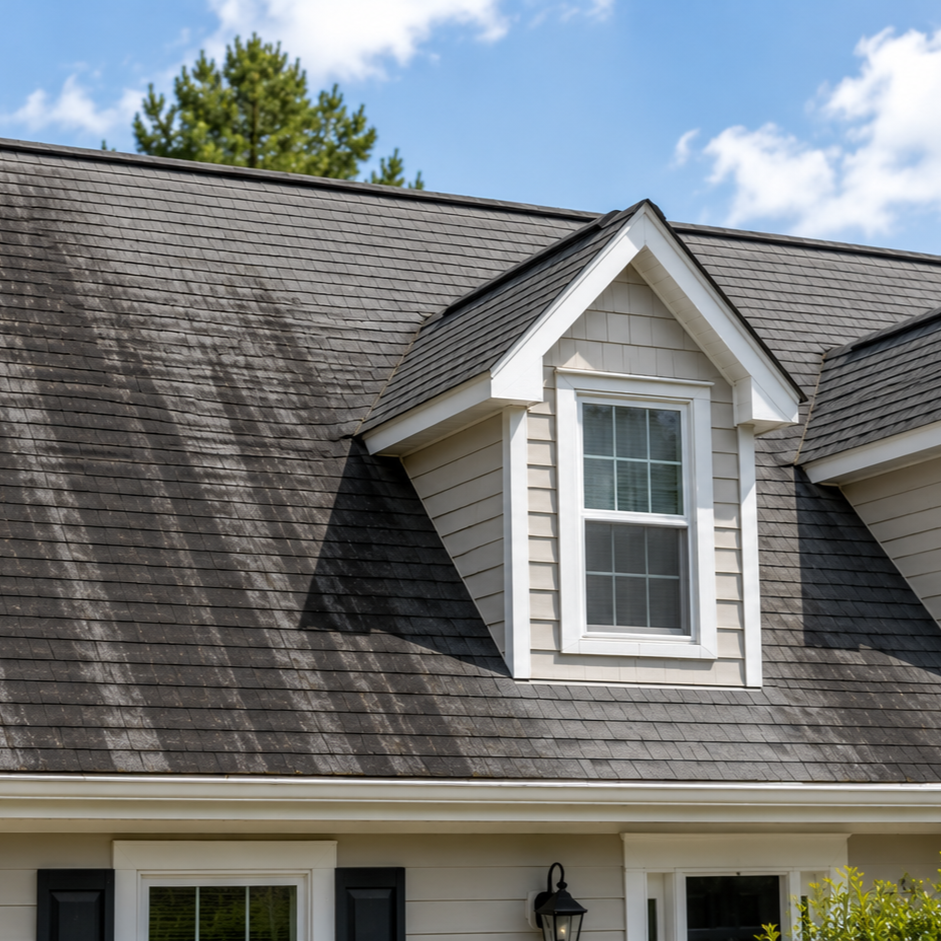
Quick Answer: Those dark black streaks running down a roof are almost always caused by algae — a type of blue-green algae that grows on roofs, especially asphalt shingles, in humid climates. The algae feeds on moisture and the materials in the shingles, and it appears as black streaks, typically streaking downward as it spreads with rainwater. It thrives in shaded, damp areas and humid conditions. The streaks are unsightly and the algae can affect the shingles over time. The safe way to remove them is soft washing — low pressure plus cleaning solutions that kill and remove the algae without damaging the shingles. Pressure washing a roof can damage it, so soft washing, ideally professional, is the right method.
If you've noticed dark black streaks running down your roof, you're seeing one of the most common roof staining problems — and it's not dirt or simple weathering. Those streaks are a living growth, and they spread and worsen if left alone. Understanding what causes the black streaks and how to safely remove them, helps you restore your roof's appearance and protect it. Here's what's behind those streaks.
The Cause: Roof Algae
The black streaks on a roof are caused by algae — specifically a type of blue-green algae that grows on roofs, particularly asphalt shingle roofs. Despite being a blue-green algae, it appears as dark black streaks on the roof. The algae grows by feeding on moisture and the materials present in the shingles, establishing itself on the roof surface. So those streaks aren't stains in the ordinary sense — they're colonies of algae growing on your roof. This is why they appear and spread over time rather than just being a fixed mark. Recognizing that the black streaks are algae is the key to understanding why they form and how to remove them.
Why It Streaks Downward
A distinctive feature of roof algae is the way it forms downward streaks. As the algae grows and rainwater runs down the roof, it carries and spreads the algae downward, creating the characteristic black streaks that run from the top of the roof toward the bottom. So the streaking pattern reflects how the algae spreads with the flow of water down the roof. This is why you see streaks rather than random patches — the water movement shapes the growth into vertical streaks. Over time, as the algae continues to grow and spread, the streaks become more pronounced and cover more of the roof. The streaking is a signature sign that the dark marks are algae.
Where and Why It Thrives
Roof algae thrives in particular conditions: moisture, humidity, and shade. It grows best in humid climates, where there's abundant moisture to feed it, and in shaded, damp areas of the roof that don't dry out quickly — north-facing slopes, areas under trees, and spots that get less sun. The combination of moisture and limited sun creates the conditions algae needs. So homes in humid regions and roofs with shaded, damp sections are the most prone to black algae streaks. If your roof's streaks are worst on the shaded, north-facing, or tree-covered sections, that's because those areas stay damp — providing the conditions the algae favors. The environment determines where and how much the algae grows.
| Factor | Effect on roof algae |
|---|---|
| Humid climate | Abundant moisture feeds growth |
| Shaded/north-facing areas | Stay damp; algae thrives |
| Trees over the roof | Shade and moisture promote growth |
| Rainwater runoff | Spreads algae into downward streaks |
How to Remove It Safely
The safe and effective way to remove black algae streaks from a roof is soft washing. Soft washing uses low pressure combined with cleaning solutions that kill and remove the algae at the source, without the high force that could damage the roof. This is important because the algae needs to be killed and removed, which the cleaning solutions do, and because a roof should not be pressure-washed. So soft washing addresses the algae thoroughly while protecting the shingles. It's the method designed for cleaning roofs safely, removing the black streaks and the algae causing them without harming the roof. For black streaks on a roof, soft washing — ideally done professionally with the right solutions and safety measures — is the appropriate approach.
Don't pressure wash your roof to remove algae streaks. The high pressure can blast away the protective granules on shingles and damage the roof, shortening its life — and climbing onto a roof to clean it is dangerous. Roofs should be soft washed, which removes the algae safely with low pressure and cleaning solutions, ideally by a professional with the proper equipment and safety measures.
Why You Shouldn't Just Ignore Them
It's tempting to dismiss roof algae streaks as merely cosmetic, but there are reasons to address them. The streaks are unsightly and detract from your home's curb appeal, and as the algae continues to grow and spread, they get worse over time, covering more of the roof. The algae can also affect the shingles over the long term, so removing it helps protect the roof. So black streaks are worth addressing both to restore your roof's appearance and to remove a growth that can impact the shingles. Because soft washing is the safe method and roof cleaning is best done with proper equipment and safety measures, having a professional soft wash the roof removes the algae streaks safely and effectively, keeping your roof clean and protected.
Frequently Asked Questions
Black streaks on a roof are caused by algae — a type of blue-green algae that grows on roofs, especially asphalt shingles, in humid climates. Despite being blue-green, it appears as dark black streaks. The algae feeds on moisture and the materials in the shingles, spreading downward as rainwater runs down the roof, creating the characteristic streaks. So the streaks are a living growth, not just dirt or weathering.
Because as the algae grows and rainwater runs down the roof, the water carries and spreads the algae downward, creating streaks that run from the top of the roof toward the bottom. The streaking pattern reflects how the algae spreads as water flows down the roof, which is why you see vertical streaks rather than random patches. The streaking is a signature sign the marks are algae.
In humid climates and on shaded, damp areas of the roof that don't dry quickly — north-facing slopes, areas under trees, and spots that get less sun. Algae thrives on moisture and limited sun, so these damp, shaded conditions favor it. Homes in humid regions and roofs with shaded sections are the most prone to black algae streaks, which is why the growth is often worst on those areas.
Soft washing is the safe, effective method — it uses low pressure plus cleaning solutions that kill and remove the algae at the source without the high force that could damage the roof. A roof should not be pressure-washed, since that can damage the shingles. So for black streaks, soft washing removes the algae and the streaks safely while protecting the roof, ideally done professionally with the right solutions and safety measures.
No, you shouldn't. High pressure can blast away the protective granules on shingles and damage the roof, shortening its life, and climbing onto a roof to clean it is dangerous. Roofs should be soft-washed instead, which removes the algae safely with low pressure and cleaning solutions. Pressure washing a roof risks costly damage, which is why soft washing is the correct method for roof algae.
They're unsightly and worth addressing for appearance, and they get worse over time as the algae spreads, covering more of the roof. The algae can also affect the shingles over the long term, so removing it helps protect the roof. So while the streaks start as a cosmetic concern, they spread and can impact the shingles, which is why removing them with safe soft washing is worthwhile.
Those Streaks Are Algae — Remove Them Safely
The black streaks on your roof are algae, a blue-green algae that grows on shingles in humid, shaded, damp conditions and spreads into downward streaks as rainwater carries it. The streaks worsen over time and can affect the shingles, so they're worth removing. The safe method is soft washing — low-pressure and cleaning solutions that kill and remove the algae without damaging the roof, since pressure washing a roof causes harm. For lasting, safe results, have the roof soft-washed professionally.
Black streaks taking over your roof? — Get them removed safely with soft washing that protects your shingles. Superior Power Washing serves Waldorf, La Plata, Clinton. Call (240) 901-4252.
