
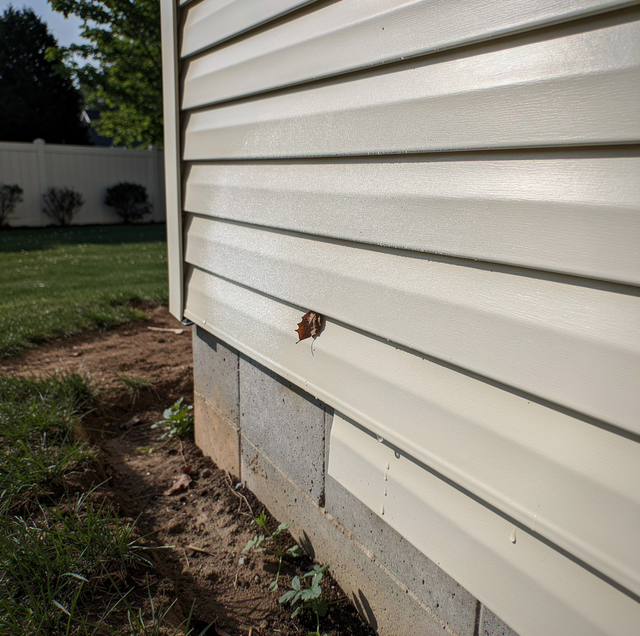
Run a finger along a sun-facing section of siding, and it comes away dusted in a fine, pale powder, lighter than the panel underneath. The instinct is to read that as dirt sitting on the wall, and the fix that instinct reaches for is more pressure: a stronger stream, held closer, worked harder until the smear stops showing up. Both instincts point the wrong way. The powder is not sitting on the vinyl. It is the vinyl, in small pieces, and the more force a wand applies to remove it, the more of the panel's own surface leaves with it.
The Mechanism Behind Chalking on Vinyl Siding
Vinyl siding is a PVC resin loaded with pigment and blended with stabilizers meant to slow the effects of sunlight on plastic left outdoors. Ultraviolet light still breaks the resin apart at the surface year after year, and as that thin outer layer degrades, it releases the pigment it was holding as a fine, dry powder. That powder is chalking: not a coating applied on top of the panel that can be stripped away and redone, but the panel's own surface material shedding a few molecules at a time. The pigment itself is a fine mineral powder mixed through the resin rather than a surface film, so once the resin holding it at the face erodes, the loose pigment has nothing left to bind it to the panel, and it comes free on contact. Stabilizers slow the breakdown; nothing in a vinyl formulation stops it permanently, because the panel spends its entire service life absorbing the same sunlight that degrades it.
Color plays into how visible chalking gets, though not through the mechanism it might seem to. Chalk is easiest to see on dark panels: the pale powder stands out against brown or green and hides against white or almond. Both colors chalk. The dark panel just shows the powder more plainly, while a lighter panel can carry the same coating and still look close to its original color.
How to Tell Chalk From Ordinary Dirt
Ordinary dirt sits in patches rather than an even haze: streaks below a downspout, a band near the ground where splashback lands, grime collecting under a window sill where runoff pools. It comes off with a mild detergent and a soft brush, and once it is gone, the panel underneath looks the same as the rest of the wall. Chalk behaves differently on every count. It spreads evenly across the entire sun-exposed surface rather than concentrating in splash zones; it rubs onto a dry finger or a dark glove as a fine dust rather than a wet smear; and running water alone smears chalk rather than clearing it.
Rub a sun-facing panel and one sheltered under an eave or porch roof on the same wall. Powder on the sunny panel and little under the eave confirms chalk rather than a film of dirt covering everything.
How to Tell Chalk From Mildew and Algae
Mildew and algae are living growth, not weathered plastic, and they read differently once you know to look. Growth concentrates in shaded, damp corners of a wall rather than spreading evenly across the sun-facing sides where chalking shows up worst, and it shows as green or black patches that smear wet and dark when you touch them rather than lifting as a dry, pale powder. Texture is a second tell: chalk leaves the panel feeling dry and dusty under a palm even on a humid day, while a patch of algae or mildew can feel faintly slick or tacky before it is disturbed, because the growth is holding moisture against the surface rather than shedding a dry residue. A wall can carry both conditions in different spots: chalking on the sunny south face and a patch of dark growth on the shaded north corner, each needing a different response rather than a single fix for both.
More Pressure Strips Chalk Unevenly
Because chalk is the panel's own surface breaking down, a concentrated stream of water does not lift it the way it lifts dirt sitting on top. It strips it, and it strips unevenly. Wherever the wand passes directly, the loose chalk and a thin layer of weathered resin underneath both go, exposing a slightly deeper, less faded color. Wherever the wand's pass overlaps less completely, chalk stays behind. The result is a panel that looks streaked and blotchy in a new pattern: brighter stripes where the water tracked hardest next to duller bands where the spray only grazed the surface, which is the opposite of the even, clean look the extra pressure was supposed to produce, and a separate risk alongside it: concentrated pressure can force water up under the panel's overlapping laps instead of rinsing down and off the face.
What a Soft Wash Can and Cannot Fix
Soft washing relies on a cleaning solution paired with low pressure to lift loose material rather than force it off, so it can clear chalk dust and surface grime without abrading the layer underneath the way a concentrated stream does. Done well, it leaves an even, uniform panel rather than the streaked result heavy pressure produces, and it does not add to the resin loss the way high pressure does.
What it cannot do is reverse the degradation already sitting in the panel. A wash lifts chalk that has already formed; it cannot rebuild the resin layer that released it or return pigment the sun has already broken down. Expect a freshly washed, heavily chalked panel to look a shade flatter than it did when the vinyl was new, even at its cleanest, because that color loss occurs at the material level, and no amount of rinsing can put it back. A wash also does nothing to stop the next several years of sunlight from continuing the same process, which is why chalking on an older wall returns.
When Paint or Replacement Replaces Cleaning as the Answer
Cleaning has a ceiling. If a panel keeps leaving visible powder onto a hand or a cloth within a day or two of being washed and fully dried, either enough of the surface resin is gone that a wash is only ever a temporary fix, not a lasting one, or the wash left chalk on the panel that a repeat cleaning would still remove. At that point the choice is between painting the siding or replacing it, and both are jobs outside soft washing: painting vinyl calls for a paint rated for the material and its expansion and contraction, and going with a color darker than the panel's own can build enough surface heat to warp it, a real constraint on which colors are safe to use there. Replacement is the answer once the vinyl itself has gone brittle or is cracking rather than just chalking cosmetically, since a wash and a coat of paint both depend on a panel that is still sound enough to hold either one. Diagnosing which side of that line a wall sits on, and cleaning it correctly either way, is the job here; the paint or the tear-off and re-siding is a different trade's work. A wash beforehand still earns its keep even when paint or replacement is next, since a clean panel lets a painter see the true extent of the chalking and lets an installer confirm which sections of a wall need new siding rather than just a fresh coat.
Frequently Asked Questions
No. Some chalking is normal weathering for any vinyl. Vinyl warranties measure excessive or uneven color change against the maker's fade terms, not the mere presence of chalk, so a light haze on its own is not evidence of a bad installation or a defective run of panels.
Orientation drives it: south- and west-facing walls take the most direct, highest-angle sun through the afternoon, so those elevations chalk first, while a shaded north wall on the same house can stay close to its original gloss under the same roof and the same siding batch.
Yes. Outdoor furniture, planters, or a car parked against a chalking wall can pick up fine dust through repeated contact.
Yes. Vinyl shutters and trim are the same kind of resin and chalk under the same sun, and the baked paint on aluminum gutters and trim coils chalks as its binder breaks down. A pale haze on those parts is the same weathering as on the siding, not a separate problem.
No. Paint laid over chalk bonds to loose powder instead of the panel, so it peels early. A painter cleans the chalk off and lets the wall dry completely before priming, since chalk left in place is what causes that kind of early paint failure.
There's no fixed timeline, since it tracks the same sun exposure that caused it the first time. A wall that gets direct afternoon sun rebuilds a visible haze on a shorter cycle than a shaded wall on the same house, so a wash interval that suits one side of a house can leave the other side visibly chalky again before the next scheduled cleaning.
Not sure if it is chalk or dirt on your siding — book a soft-wash evaluation that tells the difference and cleans only what needs it. Superior Power Washing serves Waldorf, La Plata, and Clinton. Call (240) 901-4252.
