
Why Commercial Buildings Need a Set Washing Schedule
A homeowner can get away with washing the house once or twice a year and calling it done. A commercial building rarely has that luxury. Between higher foot traffic, parking lot exhaust residue, and a facade that customers judge within seconds of pulling into the lot, commercial exterior surfaces accumulate grime on a different timeline than residential ones, and a schedule built around "when it looks dirty" tends to always run a step behind.
Why Commercial Exteriors Get Dirty Faster
Foot traffic alone changes the math. A retail entrance sees dozens or hundreds of shoe soles a day, each one tracking in road grit, oil residue from the parking lot, and whatever the weather left on the ground. Add vehicle exhaust settling on lower facade sections, delivery trucks idling near loading docks, and irrigation systems that spray hard water and fertilizer onto walls, and a commercial property is exposed to more grime sources than a typical house ever sees. Different facade materials react to that exposure differently, which is part of why a one-size-schedule doesn't work across a portfolio of properties.
Comparing Wash Frequency by Facade Type
| Facade material | Common grime source | Typical wash interval | Why |
|---|---|---|---|
| EIFS or stucco | Airborne pollutants, mildew in shaded areas | Every 6 to 12 months | Porous texture holds dirt and organic growth longer than smoother materials |
| Brick | Efflorescence, general urban grime, mildew on shaded sides | Every 12 months | Mortar joints and brick pores trap mineral and organic staining over time |
| Metal panel or ACM | Oxidation streaking, exhaust residue near loading areas | Every 6 to 9 months | Streaking is highly visible on reflective or painted metal and affects curb appeal quickly |
| Vinyl or fiber-cement siding | Algae, pollen film, general dust | Every 12 months | Similar buildup pattern to residential siding but higher exposure from traffic and signage lighting heat |
| Storefront glass and entry glazing | Fingerprints, exhaust film, water spotting | Monthly to quarterly | High visibility surface that directly affects first impression |
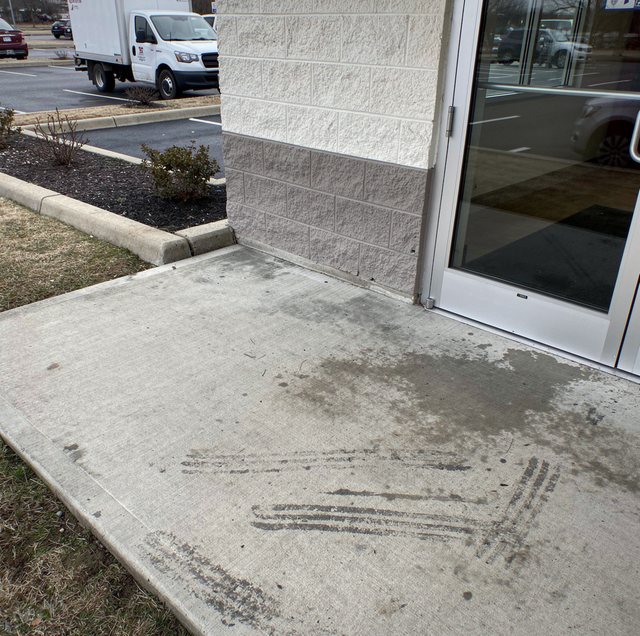
| Parking lots, walkways, entry pads | Oil, gum, tire marks, general grime | Every 6 to 12 months | Slip hazard and appearance both degrade with repeated vehicle and foot traffic |
What's Actually at Stake Beyond Appearance
A grimy facade does more than look neglected; it actively shapes how a visitor judges everything else about the business before they've walked through the door. Retail and hospitality tenants, in particular, see foot traffic respond to exterior conditions, since a clean, well-kept entrance signals the attention to detail customers expect inside. For property managers overseeing multiple tenants, a consistent wash schedule also protects the building's surface materials themselves. Mildew and algae left to sit on stucco or siding for a year or more can work into the material's texture, making the next cleaning harder and more time-consuming than it would have been on a regular interval.
Why HOA and Multi-Tenant Properties Need a Different Approach Than a Single House
A homeowners association manages dozens or hundreds of building exteriors, shared walkways, and common-area surfaces, often with the same siding or stucco batch installed across the entire community at once. That uniformity means every unit tends to show wear on a similar timeline, which is why HOAs often benefit from a rolling schedule, cleaning sections of the property in phases rather than trying to service everything at once. A phased approach also keeps the workload predictable from one season to the next, rather than letting the whole community's exterior condition slip until it becomes an obvious, all-at-once project.
Reading Grime Signals Before They Become Visible Problems
By the time algae streaking or mildew blotching is visible from the parking lot, it's usually been developing for weeks. A few earlier signals are worth checking on a walk-through: a slightly tacky feel on painted metal surfaces near a loading dock (early exhaust residue buildup), a faint musty smell near shaded entryways (early mildew activity before visible staining), and water that no longer beads on stucco or brick during a light rain (a sign the surface has become more porous and is absorbing grime faster than usual).
Why Low-Pressure Methods Matter More on Commercial Buildings
A commercial facade usually carries more attached hardware than a house does: illuminated signage, mounted awnings, security cameras, and painted logos or branding elements applied directly to the surface. High-pressure cleaning carelessly directed near any of these can force water into sign housings and junction boxes, or strip paint from a branded panel that was never meant to withstand direct pressure. A soft-wash approach, using a cleaning solution at lower pressure to break down grime and organic growth before a gentle rinse, protects both the base material and everything mounted to it, which is part of why soft washing has become the standard method for stucco, EIFS, and painted metal panel buildings rather than a straight pressure wash.
Parking Lots and Walkways Need Their Own Safety Attention
A grimy or oil-stained walkway gets more slippery when wet than clean concrete does, which is why building owners and property managers treat these surfaces as a safety priority, not just an appearance one, and a regular cleaning schedule is one of the more effective ways to keep them from becoming a hazard. Entryway mats and covered walkways tend to collect a different kind of buildup than open parking lots do, since foot traffic packs dirt and moisture into mat fibers and the concrete just beneath them, creating a localized wet, slick zone that's easy to overlook during a general property walk-through. Dumpster corrals and loading areas accumulate concentrated grease and organic waste residue that, if left unaddressed, can attract pests and create an unpleasant smell near an entrance or shared walkway.
Building a Schedule That Fits the Property
The comparison above is a starting point, not a fixed rule, since sun exposure, tree cover, and proximity to a busy road all shift the timeline in either direction. A shaded, tree-lined property will need mildew-prone sections addressed more often than the table suggests, while a building in an open, sunny lot with less organic growth pressure might stretch some intervals slightly longer. What matters most is setting the interval before problems appear, rather than reacting once tenants, customers, or an HOA board start commenting on the building's appearance.
One-Time Cleaning vs. a Recurring Service Plan
Some properties only need a single cleaning, a new tenant taking over a space that's been neglected, or a building preparing for a specific event or inspection. But a one-time wash resets the clock without addressing why grime accumulated in the first place, and within a few months the same facade sections that prompted the original call are usually building back up. A recurring plan, timed to the intervals in the comparison above, catches buildup at an early, easy-to-remove stage instead of letting it set in, which is generally faster and less labor-intensive per visit than periodically starting over from a heavily soiled baseline. Property managers overseeing several buildings often find a recurring plan easier to schedule and staff around too, since the workload becomes predictable rather than an occasional large, disruptive project.
Two Seasonal Windows That Change the Buildup Pattern
Commercial exteriors respond to two very different seasonal pressures, and a schedule that only accounts for one will miss the other. During warmer, humid stretches, pollen and organic film build up fastest, and mildew growth accelerates on shaded facade sections and around irrigation-fed landscaping beds next to the building. During cooler months with heavier rain, the bigger concern shifts to storm-driven debris and silt collecting in gutters, entryway overhangs, and parking lot drains, along with road treatment residue tracked in by vehicles and foot traffic. A property that only schedules a wash once a year, timed for one of these two windows, ends up unprotected during the other, which is part of why most commercial contracts land on two to four visits annually rather than a single once-a-year pass.
Coordinating Service Without Disrupting the Property
A commercial cleaning visit differs from a residential one because there are usually other people to account for while the work is underway. Wet, freshly cleaned walkways and entry pads need clear cordoning or signage until they've dried, since a rinsed surface can be slicker than a dirty one for the short window before it fully drains. Landscaping beds, irrigation heads, and any low-voltage lighting near the facade get flagged and worked around rather than sprayed directly, since runoff carrying cleaning solution can stress nearby plants if it's not directed away from the beds. For properties with multiple tenants, a heads-up in advance, even just a day or two, helps tenants move vehicles from an adjacent lot section or avoid propping a door open onto a section being cleaned, small details that keep a routine service visit from becoming a disruption.
Frequently Asked Questions
Yes, most commercial washing is scheduled for early morning, evening, or off-hours specifically to avoid disrupting customer traffic or blocking entrances during peak business times.
These sections often benefit from a degreasing pretreatment rather than a straight rinse, since diesel particulate binds to painted or sealed surfaces more like an oil stain than ordinary dust. Scheduling the loading dock area on its own, with a shorter interval rather than lumping it in with the rest of the facade's wash cycle, is usually what keeps it presentable between full-building visits.
Yes, fleet washing is typically scheduled alongside building exterior service for businesses that keep vehicles on-site overnight, since both share the same road grime, exhaust film, and weather exposure.
Illuminated signage generates heat that can accelerate moisture evaporation right around the fixture, sometimes leaving a slightly different buildup pattern (drier, dustier) compared to shaded sections just a few feet away.
Yes, storefront glass is typically cleaned with a separate, lower-residue method and squeegee finish, since the mineral streaking left behind by pressure-washing runoff would be far more visible on glass than on brick or stucco.
One missed cycle rarely causes lasting damage, but it does compound: mildew and algae that get an extra six months to establish are noticeably harder and slower to remove on the next visit than they would have been on schedule.
A commercial facade is judged constantly, by tenants, customers, and passersby, whether or not anyone on the property is thinking about it. Setting a wash interval based on material and exposure, rather than waiting for a complaint, keeps that judgment working in the property's favor rather than against it.
Set up a commercial or HOA cleaning schedule — protect curb appeal and surface materials year-round. Superior Power Washing serves Waldorf, La Plata, and Clinton. Call (240) 901-4252.
