
Does My Driveway Need Cleaning or Sealing? How to Read the Signs
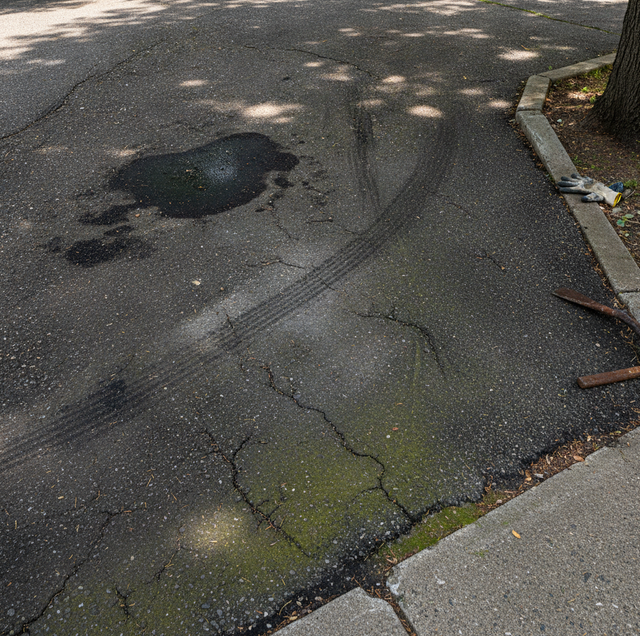
Your driveway is looking rough, and you are trying to figure out whether a good wash will fix it or whether it needs something more. Those are actually two different jobs, and knowing which one you are looking at saves you from paying for the wrong fix or skipping the step that matters.
Cleaning and sealing solve different problems. Cleaning deals with everything sitting on top of the surface. Sealing deals with the surface itself and whether it can still keep water and stains out. Most of the time, they happen in that order, and the signs your driveway shows you will point clearly to one, the other, or both.
Quick Answer: Cleaning removes what is on the surface: dirt, algae, oil, rust, and tire marks. Sealing protects the surface once it is clean, so water and stains no longer soak in. If your driveway looks dirty or streaked but the surface is solid, it needs cleaning. If water soaks in instead of beading and the color looks washed out, it also needs sealing. You always clean first, then seal.
What Cleaning Actually Removes
Cleaning is about the layer of stuff that has collected on top of your concrete, pavers, or asphalt. None of it is part of the surface. It is all sitting there, and the right method lifts it off.
The usual suspects are dirt and general grime, green or black organic growth, oil and grease spots near where you park, rust from a metal planter or patio furniture, tire marks, and mildew in the shaded stretches. In a humid climate, moisture and pollen give algae and mold a steady food source, so that green or black film tends to come back on a regular cycle. Warm, damp months feed it fastest, but shaded, poorly drained sections stay just moist enough to keep it growing through cooler stretches too, which is why a driveway can look grimy in almost any season.
The method depends on what you are removing and what you are removing it from. Heavier concrete grime can take pressure washing, while softer surfaces and organic growth respond better to a lower-pressure soft wash paired with a cleaner matched to the stain. Oil wants a degreaser, rust wants a rust remover, and algae wants a treatment that actually kills the growth rather than just blasting the top layer off and leaving the roots behind. Match the cleaner to the problem, and the surface comes back looking close to how it started.
What Sealing Actually Does
Sealing is a separate job that happens after the surface is clean. A sealer soaks into or coats the driveway and forms a barrier, so water, oil, and staining agents sit on top long enough to be wiped or rinsed away instead of soaking down into the material.
Think of a sealed surface like a waxed car hood. Rain beads and rolls off a fresh coat of wax, but once the wax wears thin, the water spreads flat and clings. Your driveway does the same thing. A working sealer sheds water and resists stains. A worn one lets everything soak straight in.
That barrier is what protects the surface over the long run. Without it, water works into the pores, oil darkens the material, and the surface takes on stains faster and faster as it ages. Sealing does not clean anything, and it does not undo damage that is already there. It preserves a clean, sound surface going forward.
Signs Your Driveway Just Needs Cleaning
Some driveways look terrible but are structurally fine. The problem is entirely on the surface, and a proper cleaning brings them back.
You are probably looking at a cleaning job if you see:
- Surface stains that sit on top: oil spots, tire marks, or rust
- Green or black growth spreading across the concrete or pavers
- A general dull, dirty, grimy look over the whole driveway
- Grime concentrated in the shaded or low-traffic areas
- A surface that is still solid underneath all the mess
The tell here is that the material itself is sound. It is not crumbling, it is not drinking up water, and the color under the dirt is still good. Everything wrong with it is sitting on the surface waiting to be lifted off. Clean it, and you are done.
Signs Your Driveway Also Needs Sealing
Other driveways need more than a wash. The surface has started to lose its ability to keep water and stains out, and cleaning alone will get it looking better for a while before it slides right back.
Watch for these:
- Water soaks in and darkens the surface instead of beading up
- The color looks faded or washed out compared to how it used to look
- An older concrete or paver driveway that grabs new stains fast
- Minor surface scaling, where thin flakes start lifting off the top
- A driveway that was sealed before, but the seal has clearly worn off
The common thread is that the surface has gone porous. It is absorbing rather than repelling. Cleaning still comes first, because you cannot seal over dirt, but a driveway showing these signs needs the sealing step after the wash to actually stay protected.
The Order Matters: Clean First, Then Seal
This is the part people get backward. You clean first, let the surface dry fully, and then seal. You never seal instead of cleaning, and you never seal over a dirty or damp surface.
Here is why the order is not negotiable. A sealer bonds to whatever it lands on. If it lands on dirt, algae, or a film of oil, it locks that grime in place under the coating, and the sealer itself fails to grip properly. You end up with trapped stains showing through and a seal that peels or clouds early. If it lands on a damp surface, the trapped moisture does the same thing from underneath. Clean, dry, then seal is the sequence that works.
So the diagnosis has two layers. First, figure out whether you have a cleaning problem, meaning stains and growth on the surface. Then figure out whether you also have a sealing need, meaning the surface is absorbing water and fading. A driveway can need just the first. A driveway that needs the second always needs the first done before it.
Different Surfaces, Different Treatment
What your driveway is made of changes how both jobs are done, so it helps to know which material you are dealing with before you decide on a plan.
Concrete gets cleaned and then, if it needs sealing, gets either a penetrating sealer that soaks in or a film-forming sealer that coats the top, depending on the look and protection you want. Pavers get cleaned, then the sand in the joints gets topped back up before sealing, because the sealer helps lock that joint sand in place and keep the pavers from shifting. Asphalt is its own thing entirely. It gets cleaned and then sealcoated on a schedule of its own, which is a different product and rhythm from concrete or paver sealing.
The takeaway is that the surface material sets the method. A plan that fits a concrete driveway is not the same plan as a paver driveway or an asphalt driveway.
A Quick Word on Safety
Both jobs carry real hazards worth respecting. A pressure washer throws water hard enough to injure skin, etch soft surfaces, and blast grout or joint sand out of place if you crowd the nozzle or pick the wrong tip. The cleaning chemicals, degreasers, rust removers, and algae treatments need proper handling, ventilation, and care around plants and pets.
A freshly cleaned or sealed driveway is also slick until it dries and cures, so keep foot and car traffic off it during that window. Sealing in particular is easy to get wrong. Uneven application, sealing at the wrong temperature, or trapping moisture leaves streaks, cloudiness, or a coat that fails early. It is the kind of job where a professional with the right products and timing usually earns the call.
Frequently Asked Questions
Pour a little water onto the surface and watch what it does. If it beads up and sits on top, the seal is still working, and your driveway most likely just needs a cleaning. If the water soaks in and darkens the concrete within a few seconds, the surface is porous and due to be sealed after it has been cleaned first. This water-bead test is the fastest read you can do yourself, no tools required.
Clean first, then seal, but the step that trips people up is the drying in between. The surface has to be fully dry before any sealer goes down, which often means 24 to 48 hours after washing and longer in humidity when the pores hold moisture. A simple check is to tape a square of plastic sheet down for a few hours and see whether moisture beads underneath before you seal. If the underside stays dry, the slab has released its water and is ready; if it fogs up, wait longer.
Each stain points to a different job. Oil and rust are targeted stains that call for a matched remover rather than a general wash. A white powdery patch is something else entirely: it is efflorescence, minerals wicking up through the concrete rather than dirt sitting on the surface, so it signals moisture moving through the slab that a plain cleaning will not stop. Reading the stain that way tells you whether you are facing a surface problem or a moisture problem underneath.
Yes, and pavers are the clearest example of why. The sand in paver joints is structural, not cosmetic: it locks the pavers together so they do not shift underfoot or under a car. So the joints are swept full again and, with polymeric sand, activated with a light watering before sealing, a step a poured concrete slab never needs because it has no joints to hold. Asphalt is different again, cleaned and then sealcoated with its own product on its own cycle.
No, it locks them in. Once a stain is sealed under a coat, it is usually trapped there for the life of that sealer, so getting rid of it later is not a matter of scrubbing harder. You have to strip the sealer off first to even reach the stain, then treat it, then reseal, which is far more work than removing it up front. That is the whole reason stain removal always comes before sealing.
Cleaning happens as growth and stains build up, which in a damp climate often works out to roughly once a year. Sealing runs on a much longer cycle, typically every few years, and the exact timing depends on wear rather than the calendar. The water-bead test is what tells you the seal has actually worn thin and it is time to reseal, rather than guessing from how long it has been.
Book a driveway inspection — get a clear read on whether yours needs cleaning, sealing, or both. Superior Power Washing serves Waldorf, La Plata, and Clinton. Call (240) 901-4252.
