
Why Your Deck Looks Gray and Worn (and What Fixes It)
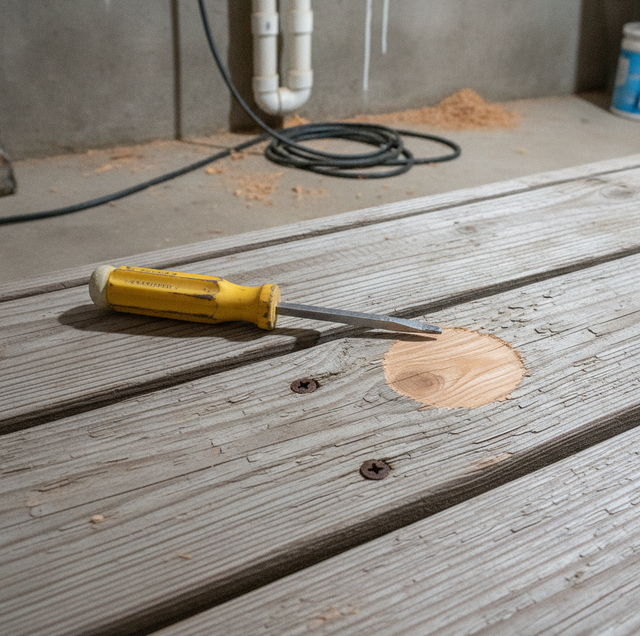
Quick Answer: A gray deck is usually sun damage, not rot. UV light breaks down lignin, the natural glue in wood, so surface fibers go silvery and loose. If the wood underneath is still hard, it cleans and restores. If it's soft, splintering, or cupped, those boards are past saving.
You built the deck, sealed it, and for a couple of seasons, it looked rich and warm. Now it's the color of an old fence post. The boards read silvery-gray, maybe blotchy, and the surface feels a little rough when you run your hand across it. Before you assume the whole thing is rotting out, it helps to know what gray actually is, because most of the time it's a surface problem you can reverse, not a structural one you have to rebuild.
What the Gray Actually Is
Wood is held together by lignin, the natural glue that binds the cellulose fibers into a solid piece. Ultraviolet light in sunlight breaks lignin down. It's a slow chemical unzipping right at the surface, maybe a fraction of a millimeter deep, and as the lignin degrades, the loosened surface fibers lose their color and scatter light differently. That's the silvery-gray you see. Rain then rinses away the broken-down bits and exposes a fresh layer to start the cycle again.
Think of it like a sunburn that never peels on its own. The damage stays on the outermost skin of the board while everything below it is unaffected. That's the single most useful thing to understand here: gray is almost always skin-deep.
Sitting on top of that UV weathering, a few other things pile on and change how the gray reads from board to board.
The old sealer or stain is wearing off. Whatever finish you put down eventually oxidizes and abrades away, especially on the traffic lanes and the rail tops that catch the most sun and foot wear. As it thins, the bare wood underneath starts weathering, so you get a patchy look, protected color under a chair, gray in the open.
Mildew, algae, and mold. In the damp, shaded parts of a deck, the ground-level boards, the north side, anything under a tree canopy, organic growth takes hold and darkens the surface. Summer humidity keeps those shaded boards damp long after the sunny ones have dried, so the same deck can look bleached-gray in the open and greenish-black-gray in the shade. That's two different mechanisms on one structure.
Raised and fuzzy grain from water. Wood is built in layers of soft springwood and harder summerwood. Water swells the soft bands, and repeated wet-dry cycling lifts them into a fuzzy, splintery texture that traps dirt and reads as dull and worn even where the color isn't the worst of it.
Tannin and iron stains. Some boards weep their own tannins and streak brown. And any steel in contact with wet wood, popped screws, an old fastener, a metal planter, can leave a blue-black iron stain around it that looks like rot but isn't.
Gray but Sound vs. Soft and Failing
Here's the distinction that decides everything you do next.
Gray but sound means the color has changed, but the wood hasn't. Press a screwdriver or even a fingernail into a board, and it stays firm. The surface might be rough, but there's solid, honey-colored wood a hair's breadth below the gray. This deck is a cleaning and restoration job.
Soft and failing means the wood itself has gone. A board feels spongy or gives underfoot, splinters lift in sheets, ends are crumbling, or boards have cupped and pulled at the fasteners. Push that screwdriver in, and it sinks with little resistance. That's rot, and no amount of washing brings rotted wood back. Those specific boards get replaced.
You can have both on one deck: sound field boards and two soft stair treads. So it's a board-by-board judgment, not a whole-deck verdict.
A few concrete tells you can check yourself:
- Does the gray brush or lightly sand off to reveal sound wood underneath? If yes, it's surface UV weathering, and it's restorable.
- Is it soft underfoot, or does a probe sink in easily? That points to rot, not weathering.
- Is it worse on the sun side or the shaded side? Even bleached-gray on the open, sunny boards is classic UV oxidation. Dark, patchy, greenish-gray concentrated in the shade is organic growth, which cleans up differently.
That last check matters because it tells you which fix you actually need. A deck that's uniformly silver from the sun wants a wood cleaner and a brightener. A deck that's dark and splotchy in the shade wants attention to the growth and the moisture keeping it there.
How the Gray Comes Off (Without Wrecking the Wood)
The goal is to lift the degraded surface layer and the growth without tearing into the good wood below. The right approach is soft washing: a deck-appropriate cleaner, usually a sodium percarbonate or a dilute sodium hypochlorite mix, depending on what's on the boards, worked in and given dwell time to break down the gray fibers and kill mildew, then rinsed at low pressure. The chemistry does the work, not brute force.
After the cleaner comes a brightener, and this step is the one people skip, and shouldn't. A wood brightener is typically oxalic acid in solution. It does two useful things at once: it neutralizes the alkaline cleaner you just used so it doesn't keep reacting, and it lifts tannin and iron stains while restoring the wood's warm tone. That's why a properly cleaned and brightened deck comes out looking closer to fresh lumber than to the gray you started with, without any stain on it yet.
Now the part that causes the most self-inflicted damage: pressure. It's tempting to put a pressure washer on a gray deck and blast it, because the gray does come off. The problem is the same layered structure from earlier. The soft springwood erodes far faster than the hard summerwood, so a tight, high-pressure fan carves shallow grooves into the soft bands and shreds the surface into fuzz. Picture running a wire brush hard along the grain of a soft pine board; you don't clean it, you gouge tracks and raise splinters. A gouged, furred deck actually weathers and grays faster afterward because you've torn open more surface for water and UV to attack, and it drinks stain unevenly. If a pressure washer is used at all, it's at low pressure with a wide fan kept moving and held back from the wood, as a rinse, not a scour.
Once the boards are clean, bright, and back to sound wood, they need protection, or the UV clock just starts over. A penetrating stain or sealer puts pigment and water-repellent back on the surface so the lignin isn't taking the hit bare. Pigment matters here because it's the pigment that actually blocks UV; a fully clear finish looks nice but leaves the wood far more exposed. How often you redo it depends on the product, the exposure, and how much sun and traffic a given deck sees, so treat "every couple of years" as a rough range to watch rather than a fixed schedule, and let the deck tell you, when water stops beading and soaks in dark, it's time.
Composite and Trex Decks Gray Differently
If your deck is composite rather than wood, the gray has a different cause and a different answer. Composite boards are wood fiber bound in plastic, and it's the plastic surface that oxidizes and chalks over time, sometimes with its own mildew in the shade. It cleans. A wash with the right cleaner takes off the chalky film and the growth and freshens the color. But here's the catch: a composite deck doesn't take stain. There's no open wood grain for a finish to penetrate, so cleaning is the whole restoration, not the first step of one. Trying to seal or stain a composite board leaves you with a coating that peels rather than a deck that's protected.
Frequently Asked Questions
You can sand a wood deck, and light sanding does remove surface gray, but on its own it creates problems. Sanding closes the wood's pores, which then resist absorbing stain evenly, so a sanded deck often develops a blotchy finish. It also can't reach the gaps between boards, the grooves, or the vertical faces where growth hides. Most restorations clean and brighten first, and reserve light sanding for spot-smoothing a few rough rail tops or splintery treads, not the whole surface.
Use a probe. Push a screwdriver or an awl into the board with moderate pressure, focusing on the spots most likely to fail: board ends, the areas around fasteners, stair treads, and anywhere that stays wet. Sound wood resists, and the tip barely enters. Rotted wood lets the tip sink in with almost no effort, and the wood may feel spongy or crumble. Also watch for cupping and lifted fastener heads, which signal boards that have swelled and moved past the point where cleaning can help.
Because wood grows in alternating hard and soft bands, and high pressure erodes them unevenly. The soft springwood blows out faster than the hard summerwood, leaving a washboard of shallow grooves and a fuzzy, furred surface where fibers have been torn loose rather than lifted cleanly. That furred surface exposes more raw wood to sun and water, so it grays faster next time and soaks up stain unevenly. The damage often doesn't show until the deck dries and the fuzz stands up.
It tracks with how much pigment the finish carries, because pigment is what actually blocks the UV that grays wood. A clear water-repellent sheds water but does little against sunlight, so a deck finished with clear starts graying again soonest. A semi-transparent stain adds enough pigment to slow UV while still showing the grain, which is why it is the common pick for a deck someone wants to still look like wood. A solid-color stain blocks the most UV and lasts longest on flat boards, but it forms a film that can peel and show wear on stair treads and high-traffic paths. There is no free lunch: more protection means less visible grain, and with solids, more prep when it is time to recoat.
Not right away, because a freshly washed deck is saturated, and the finish won't bond to wet wood. The boards need to dry down to a workable moisture content, which commonly means giving it a stretch of dry weather before finishing, often a couple of days, though shaded boards and humid stretches take longer than sunny, breezy ones. A quick field check: sprinkle water on the board. If it soaks in, the wood is dry enough to accept a penetrating finish; if it beads, there's still moisture or old sealer in the way.
Some regrowing is inevitable, since the sun and weather never stop, but a few habits stretch the time between restorations. Keep the boards clear of wet leaves, planters, and rubber-backed mats, which trap moisture against the wood and grow the dark mildew that shades a deck first. Let sun and air reach the surface where you can; thinning a branch that keeps one corner permanently damp does more than any product. Fix a gutter that drips onto the deck, because that repeated wetting grays a single stripe faster than the rest of the boards. And recoat on a sensible schedule instead of waiting until the finish is gone, since a maintenance coat over a sound finish is far less work than starting over from bare gray wood.
Book a soft-wash deck cleaning and brightening to bring your gray boards back to sound, warm wood. Superior Power Washing serves Waldorf, La Plata, and Clinton. Call (240) 901-4252.
