
How Much Does HOA Common Area Power Washing Cost Per Year
It's the third week of February. The HOA treasurer is staring at a draft budget with a line that reads "Exterior cleaning — TBD." The entrance monument has green streaks down the brick from last summer. The pool deck closed in October with a slick film starting on the north end. The kiosks show black drip lines. Two homeowners have already emailed about the sidewalks.
The board meets next Tuesday. The treasurer needs a number.
This is where most HOAs make the same mistake: they collect three quotes that aren't comparing the same scope and pick the lowest. A year later, half the work didn't get done, and the community looks worse than the year before. Here's how the real math sorts out — what's in scope, what drives the price, and what a fair annual budget looks like.
What "HOA common area cleaning" actually covers
The phrase hides a lot. A real annual contract covers every horizontal and vertical surface the association owns: the entrance monument and secondary signs, the mailbox kiosks, the clubhouse and pool deck, the playground and pavilion, the trash enclosures, the perimeter fencing, the median curbs, the sidewalk concrete, and any pedestrian benches or shelter roofs.
Most HOAs are paying for two-thirds of that scope and finding out the other third was excluded after the work is done. A "common area cleaning contract" that doesn't list each surface and frequency on the same page is a guess, not a contract.
A few items surprise property managers. Curb rust staining — the rust-colored fan where rotary sprinklers throw water across the concrete — is its own line item, $35 to $90 per affected section. Algae on playground plastic isn't optional; it's a slip-and-fall liability. Pool deck cleaning before the season opens is priced separately from the monthly pass because the dwell and chemistry are different.
There's a liability angle most boards underweight. Algae-coated pool decks, sidewalks, and amenity walkways are slip hazards, and an injury claim on common-area surfaces names the association first. Regular soft wash on the pool deck and high-traffic concrete isn't cosmetic spending; it's risk management the board's insurer will eventually ask about.
Annual budgets by community size
Annual budgets track more closely with the count of common-area structures than with the home count. A 200-home townhouse with one entrance and two kiosks costs less to maintain than a 100-home single-family community with three entrances, six cluster mailbox sites, two pavilions, and a tennis facility.
Here's how the math sorts out in 2026 dollars:
| Community size and type | Approximate scope | Annual cost range |
|---|---|---|
| Small townhouse HOA (50–100 homes, no pool) | Entrance, 2 kiosks, sidewalks, perimeter fence | $3,500–$7,500 |
| Mid-size single-family HOA (100–200 homes, pool) | 1–2 entrances, 4 kiosks, pool deck, clubhouse, playground | $7,000–$15,000 |
| Large community (200–350 homes, multiple amenities) | 2–3 entrances, 6+ kiosks, pool, clubhouse, pavilion, sport courts | $14,000–$28,000 |
| Master-planned development (350–600 homes) | Multiple entrances, full amenity suite, miles of sidewalk | $25,000–$50,000 |
| Mixed-use or 55+ active-adult community | Adds golf cart paths, pickleball courts, dog park, trails | $30,000–$75,000+ |
The spread within each tier reflects the surface mix, the visit frequency, the starting condition, and how much sidewalk square footage is in the contract. A 200-home community with six miles of sidewalk pays more than a 200-home community with one mile.
The eight cost drivers that move the budget
The community count is the headline number a board sees, but the actual quote is built from line items. These are the eight variables that shift a fair quote by hundreds or thousands of dollars in either direction.
| Cost driver | Adds (or subtracts) | Why |
|---|---|---|
| Sidewalk linear footage | $0.10–$0.25 per linear foot, per visit | Surface-cleaner tool plus rinse and recovery |
| Entrance monument complexity | $75–$250 per visit | Brick vs. stucco vs. stone; plant protection adds time |
| Mailbox kiosk count | $40–$80 per kiosk per visit | Each unit needs roof, walls, base, and pad |
| Pool deck size | $250–$650 per pre-season clean | Square footage plus algae load after winter |
| Vinyl perimeter fence linear footage | $0.25–$0.50 per linear foot, per visit | soft wash chemistry; both sides if applicable |
| Curb rust staining | $35–$90 per affected section | Rust-specific chemistry; not removed by water alone |
| Pavilion and playground structures | $125–$350 each | Roof, posts, benches, plus slip-safe rinse |
| Multi-pass annual frequency | Saves 20–30% per visit | Maintenance dwell is shorter than restoration dwell |
That last row matters most. A single-visit-per-year contract pays restoration pricing every year because the crew is doing a deep clean from a year's worth of soil. A quarterly schedule pays maintenance pricing — same crew, same chemistry, less dwell per stop. Annualized total is higher on quarterly, but unit cost per clean is lower, and the community looks maintained all twelve months instead of for six weeks after the annual visit.
Why the entrance monument deserves its own line
The entrance monument is part of an HOA that gets photographed for real estate listings. It's also the surface most likely to be quoted as "included" and least likely to be cleaned correctly.
A brick or stone monument with low-voltage accent lighting, mortared lettering, and ornamental plantings at the base needs a soft wash treatment, not a pressure pass. The chemistry has to dwell long enough to break down algae in the mortar joints without driving water into the lighting fixtures. Plants at the base have to be pre-soaked, the mix has to be runoff-safe, and the rinse measured so no soil washes from the bed onto the curb.
A crew that drags a pressure wand across the monument leaves three problems. The bottom course of brick looks cleaner than the top because the pressure was higher there. Joints below the lettering show streaks where soil washed down. And plants beneath the monument show chemical burn for two to four weeks.
A real monument visit is 30 to 50 minutes. The price difference between a fast monument and a careful one is usually under $75 per visit. The difference in how the front door looks is the difference between dignified and amateur.
How visit frequency changes the per-stop math
A community on twelve monthly visits and a community on two semi-annual visits pay very different per-stop prices for the same scope. Frequency math for a 150-home community with one pool, one clubhouse, four kiosks, and one entrance:
| Frequency | Per-visit price | Annual total | When it fits |
|---|---|---|---|
| Monthly (12 visits) | $850–$1,250 | $10,200–$15,000 | Pool seasons, dense amenity suite, premium curb appeal |
| Bi-monthly (6 visits) | $1,050–$1,500 | $6,300–$9,000 | Most mid-size suburban HOAs |
| Quarterly (4 visits) | $1,400–$2,100 | $5,600–$8,400 | Smaller communities, lighter amenity load |
| Semi-annual (2 visits) | $2,200–$3,400 | $4,400–$6,800 | Townhouse communities with one entrance |
| Annual one-time | $4,200–$6,500 | $4,200–$6,500 | Lowest spend, accepts six months of decline |
Annual looks cheapest until the board reads the homeowner emails in August. The community that pays $4,500 for a single April visit watches the entrance monument re-streak by July, the kiosks darken by August, and the pool deck slime up by the first hot week. The same community on a $7,500 quarterly contract gets four touches and a maintained common area twelve months a year.
There is a second cost most boards never count. A once-per-year restoration is on site three to four days. A quarterly crew is on site one day. Three full days of vendor activity on the grounds — traffic, hoses, signage — generates more homeowner complaints than four single-day visits across the year.
Where cheap HOA contracts cut corners
A board comparing three quotes side-by-side has a hard time spotting where the low number cuts scope. It's almost never the headline surfaces. It's almost always the trim work.
The first cut is the pre-soak and post-rinse on plantings. The cheap crew doesn't soak the beds around the monument. Plant damage shows up in eight to fourteen days as yellowed leaves. The HOA pays the lawn contractor to replace them and never connects the dots.
The second is the vinyl perimeter fence. The cheap quote says "perimeter fence included" and the crew does the road side in fifteen minutes. The interior side facing the homes never gets touched.
The third is the dumpster pad. Grease, organic spillage, and pest urine create a halo on the concrete that a 90-second rinse won't touch. A real cleaning is a hot-water pass with a degreaser pre-treatment and a 15-minute dwell.
The fourth is water reclamation. Wash water carrying degreaser or algaecide hitting a storm drain is a regulated discharge. A crew without vacuum recovery is asking the HOA to take the liability. When the county sends a stormwater notice, the board signs the response.
The fifth is the certificate of insurance and additional-insured endorsement. A vendor working on common property without naming the HOA as additional insured exposes the board members personally if something goes wrong. Ask the vendor's agent to issue the certificate naming the association before the contract is signed.
How to write the RFP so the quotes are comparable
The single best thing a board can do for next year's budget is to issue an RFP that forces every bidder to quote the same scope on the same schedule. Three quotes that look different on the page can't be compared. A written apples-to-apples comparison is also the record that protects the board if a resident later challenges the contract.
Three bids is the working minimum. Send the same scope document to all three vendors and require each to walk the property; a vendor bidding from satellite imagery is quoting a guess.
A workable RFP names every surface, the count or dimension, the frequency, and the season. Monument: brick, 14 feet wide, accent lighting, shrubs at the base, soft wash, two visits per year. Mailbox kiosks: four units, vinyl roof and posts, soft wash plus rinse, four visits per year. Pool deck: 3,200 square feet of stamped concrete, pre-season restoration in mid-April plus a maintenance touch in July. Perimeter fence: 1,800 linear feet of vinyl, both sides, two visits per year.
The RFP also names the protocols. Current certificate of insurance naming the association as additional insured. Water reclamation on detergent or algaecide near a storm drain. Pre-soak on plantings within four feet of any chemistry. Temporary "wet surface" notices for two hours after any pool deck or sidewalk wash. Chemistry and pressure matched to the surface — soft wash on painted trim, vinyl fence, and roofing elements, full pressure on sidewalks and dumpster pads.
Two more items the RFP should require: photo documentation after every visit, and references from current HOA clients (call two of them). A vendor who hesitates to share that list is signaling something the board should hear.
The contract itself deserves a quick legal pass before signing. Look at the cancellation clause (30 days is standard), the auto-renewal language, and the rate-adjustment terms (a fair contract names a CPI-tied cap on year-over-year increases). Three sentences in the contract can save the next board ten thousand dollars.
A boilerplate RFP from an HOA common area cleaning specialist makes a better starting document than the form most management companies hand the board.
Frequently Asked Questions
A clean common area is the cheapest amenity an HOA can buy
A board that scopes the exterior-cleaning contract carefully gets more value per dollar than almost any other line in the operating budget. Resale comps inside well-maintained HOAs run two to four percent above comparable communities with neglected exteriors. The same boards that hesitate over an $8,000 cleaning contract approve $40,000 plant renovations homeowners notice for two weeks.
A community that looks finished every quarter — entrance monument bright, kiosks dark to light again, pool deck slip-free, fence line uniform from corner to corner — is a community whose property values do their own marketing.
The right budget isn't the lowest number. It's the number that names every surface, sets a real frequency, and pays a crew that shows up the same day the calendar says they will.
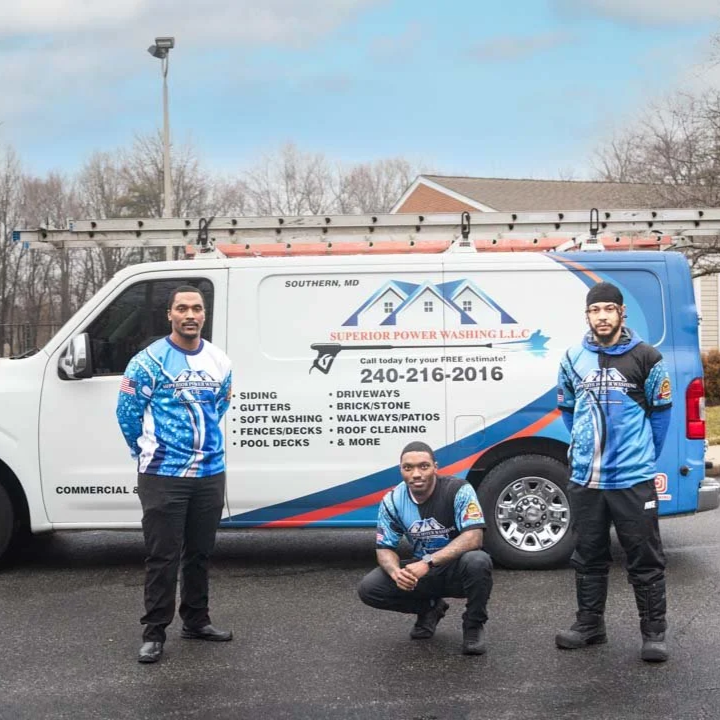
Superior Power Washing handles HOA common area cleaning contracts across Waldorf, MD, and all of Charles County and Southern Maryland — including Upper Marlboro, Accokeek, Clinton, Fort Washington, and Prince Frederick. Owner-operated, fully insured, certificates of insurance with additional-insured endorsements available for boards and management companies. Quarterly, bi-monthly, and monthly maintenance schedules; one-time pre-season pool deck restorations also available. Call (240) 901-4252 for a free on-site walk-through with the board or property manager.
