
How to Clean a Wood Deck: Bring Back Weathered Boards
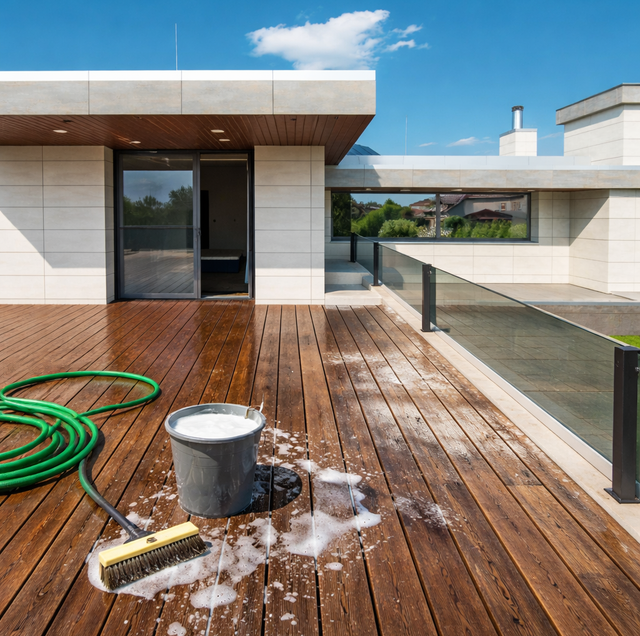
Quick Answer: Clear the deck, sweep debris out of the board gaps, apply a wood-safe or oxygen-bleach cleaner and let it dwell, scrub with a stiff brush, then rinse gently, using low pressure and a wide fan tip kept moving with the grain if you rinse with a machine at all. Follow with a wood brightener to restore color, let it dry fully, then seal or stain. Skip high pressure, and never use chlorine bleach on wood.
A wood deck that has gone gray and dingy rarely needs replacing. Most of the time the color you are missing is still there, hidden under a thin film of dirt, pollen, mildew, and sun-faded surface fiber. Clean it correctly, and the warm tone underneath comes back. Clean it wrong, and you can chew up soft cedar or pine in a single afternoon. The trick is understanding why the wood looks the way it does before you point anything at it.
Why a Wood Deck Turns Gray and Slippery
Two separate things age a deck, and they happen year-round in different ways.
The first is ultraviolet light. Sunlight breaks down lignin, the natural binder that holds wood fibers together and carries much of the wood's original color. As lignin degrades, the surface layer loses its tone and turns that familiar silver-gray. This is purely a surface effect, usually only a fraction of a millimeter deep, which is why a good cleaning and brightening can reveal fresh color without sanding down to bare wood.
The second is biological growth. Decks stay damp. Boards trap moisture in the gaps, shaded corners dry slowly, and any spot under a planter or a grill mat stays wet for days. That moisture feeds mildew, algae, and mold. Algae in particular leaves a green or black film that gets dangerously slick when wet, which is the main reason a weathered deck feels like an ice rink after a rain. Graying is cosmetic; the slippery film is a safety problem.
Both processes run in every season. Summer brings stronger UV and faster algae growth in the heat and humidity, while cooler damp stretches keep boards wet longer and let mildew settle in. A deck is never really "out of season" for either one, so the approach below works whenever you tackle it.
Why You Should Not Blast It With a Pressure Washer
The instinct is to grab the most powerful machine available and strip the gray away. On wood, that instinct causes real damage.
Softwoods like cedar, redwood, and pressure-treated pine are exactly that, soft. A narrow high-pressure stream removes the weak spring-growth fiber faster than the harder grain lines beside it, leaving a rough, raised, fuzzy surface called furring. Push harder, and you gouge visible troughs, splinter the edges of boards, and etch a permanent washboard pattern into the face. Once wood is furred and torn open, it holds more water and more dirt, so it grays and rots faster than before you started. You also risk kickback from the wand and injury to yourself.
Comparing the two cleaning styles is like the difference between scrubbing a delicate pan with steel wool versus a soft sponge and the right soap. Steel wool is faster, but it also ruins the surface. That is why exterior-cleaning pros lean on soft washing for wood: low pressure paired with a cleaning solution that does the actual work, so the chemistry lifts the growth instead of brute force tearing at the fiber. If a machine touches the wood at all, it should be at low pressure with a wide fan tip, used only to rinse.
Step-by-Step: Cleaning a Weathered Wood Deck
Clear and Protect the Area: Take everything off the deck: furniture, planters, grill, rugs, and mats. Anything left behind will leave a clean outline and block the cleaner. Wet down nearby shrubs, grass, and flower beds before you start and cover delicate plants, because even a wood-safe cleaner can stress foliage if it pools. Rinsing plants again afterward dilutes any runoff.
Run a thin tool such as a putty knife or paint stick through the gaps between boards before you clean. Wet leaves and grit pack into those channels, trap moisture, and feed the growth you are trying to remove, and clearing them lets the deck drain and dry properly later.
Apply the Right Cleaner and Let It Dwell: Use a cleaner made for wood decks, or mix an oxygen-bleach (sodium percarbonate) solution. Oxygen bleach lifts mildew, algae, and gray without the harm chlorine bleach does. Chlorine bleach breaks down wood fibers, strips the natural color unevenly, corrodes fasteners, and kills plants it touches, so keep it off the deck entirely. Wet the boards first, apply the solution evenly, and let it dwell for the time the product calls for, usually several minutes. Do not let it dry on the wood; mist it to keep it wet if the sun is strong.
Agitate With a Stiff Brush: Work the cleaner in with a stiff-bristle brush or a broom-handle scrub brush, moving along the length of the boards, with the grain. The dwell time loosens the grime; the brushing is what actually lifts it out of the surface texture. Give shaded corners and heavily grayed areas extra attention.
Rinse Gently and With the Grain: Rinse thoroughly with a garden hose. If you use a machine to speed the rinse, keep it at low pressure, fit a wide fan tip (a 40-degree tip or a soft-wash setup), hold the nozzle well back, and keep the wand moving in line with the grain. Never park the stream in one spot. The goal is to flush the loosened film away, not to carve the wood.
Brighten, Dry, and Protect
Cleaning removes the dirt and growth, but the wood can look pale or slightly darkened afterward. A wood brightener restores it. Most brighteners are oxalic-acid based; they neutralize any leftover cleaner, lift tannin and iron stains, and pull the warm color back to the surface. Apply per the label, let it dwell, then rinse.
Wear eye protection and gloves throughout, since both the cleaner and the brightener irritate skin and eyes. Never use chlorine bleach on wood, since it breaks down the fibers, strips color unevenly, and corrodes fasteners.
Now let the deck dry completely. Wood needs to release the moisture it soaked up, and depending on humidity and airflow, that can take a couple of days. Sealing or staining a damp deck traps that water underneath, which leads to a cloudy finish, peeling, and trapped rot. Dry first, always.
Once it is fully dry, seal or stain. A penetrating sealer or a semi-transparent stain slows the next round of UV graying and repels water so growth has less to feed on. This is the step that makes the cleaning last instead of fading back to gray within a season.
While the deck is stripped and empty, inspect it. Push on boards for soft or spongy spots that signal rot, check for popped or backed-out screws and nails, and look at the joists and ledger where they meet the house. A wet, slick deck is a fall hazard, and a loose board or failing fastener is worse. Catching those now, with the surface clean and visible, is far easier than after everything is back in place.
Doing It Yourself Versus Calling a Pro
A ground-level deck with light graying is a reasonable weekend job if you have the time and a stiff brush. The chemistry is forgiving as long as you stay off high pressure and use the right cleaner.
Some situations tip toward hiring a soft-wash professional. A large deck, or one raised high off the ground where you would be working from a ladder, adds real fall risk and a lot of surface to cover before the cleaner dries. Heavy, deeply set mildew and black algae often need professional-strength solutions and dialed-in dwell times to clear in one pass. And if the deck is older or valuable, a pro who soft washes for a living protects the wood, controls the runoff around your plants, and gets an even result without the furring a rented pressure washer tends to leave. The value of a pro on wood is not horsepower; it is knowing exactly how little pressure to use.
Frequently Asked Questions
Plan on a cleaning about once a year, ideally paired with a light rinse mid-year if your deck sits under trees and collects pollen or leaf drop. Reseal on a longer cycle: a simple water-drop test tells you when. Sprinkle water on the boards, and if it soaks in within a few seconds instead of beading, the finish has worn through, and it is time to reseal. Vertical rails and posts shed water and last longer than the flat walking surface, which wears first.
They fall short for a weathered deck. Household vinegar is too weak to kill established algae and mildew at the root, and its acidity can lighten wood unevenly. Dish soap leaves a residue that actually attracts dirt once it dries. Oxygen bleach (sodium percarbonate) is the workhorse here because it releases oxygen that lifts organic growth and grime, then breaks down into harmless components rather than lingering on the boards.
They use opposite chemistry and should be used in order. A cleaner is usually alkaline and strips dirt, mildew, and the gray oxidized layer. A brightener is acidic, typically oxalic acid, and it neutralizes the leftover alkaline cleaner while restoring the wood's natural warm tone and removing dark tannin or rust stains. Skipping the brightener often leaves the deck looking clean but flat and washed-out, so the two steps are meant to work as a pair.
Cleaning alone will not fully strip a solid stain or paint. Oxygen-bleach cleaners lift dirt and failing surface finish, but intact solid stain and paint need a dedicated stripper (usually sodium hydroxide-based) followed by a brightener to neutralize it. Semi-transparent and clear finishes fade and thin over time and clean off more readily. If you want to switch from a solid color to a natural or semi-transparent look, expect a stripping step, not just a wash.
The cleaner overlaps, but the caution differs. Composite and PVC boards still grow mildew and algae in the damp and benefit from an oxygen-bleach cleaner and a stiff brush. They do not need a brightener or a sealer, since there is no lignin to restore or bare fiber to protect. They also tolerate a bit more rinsing pressure than softwood, though manufacturers still warn against high pressure because it can pit the surface cap and void the warranty.
Aim for a mild, dry stretch with the boards out of direct blazing sun, so the cleaner can dwell without flash-drying on the wood. Avoid working right before rain, which dilutes the solution and stops the deck from drying enough to seal. You want at least a couple of dry days afterward for the wood to release moisture before you apply any finish, so check that the forecast is clear on both ends of the job.
Skip the guesswork and the risk of gouged boards — get a low-pressure soft wash that revives your deck safely. Superior Power Washing serves Waldorf, La Plata, and Fort Washington. Call (240) 901-4252.
