
Recurring Maintenance Contracts vs. One-Time Cleaning for Commercial Buildings
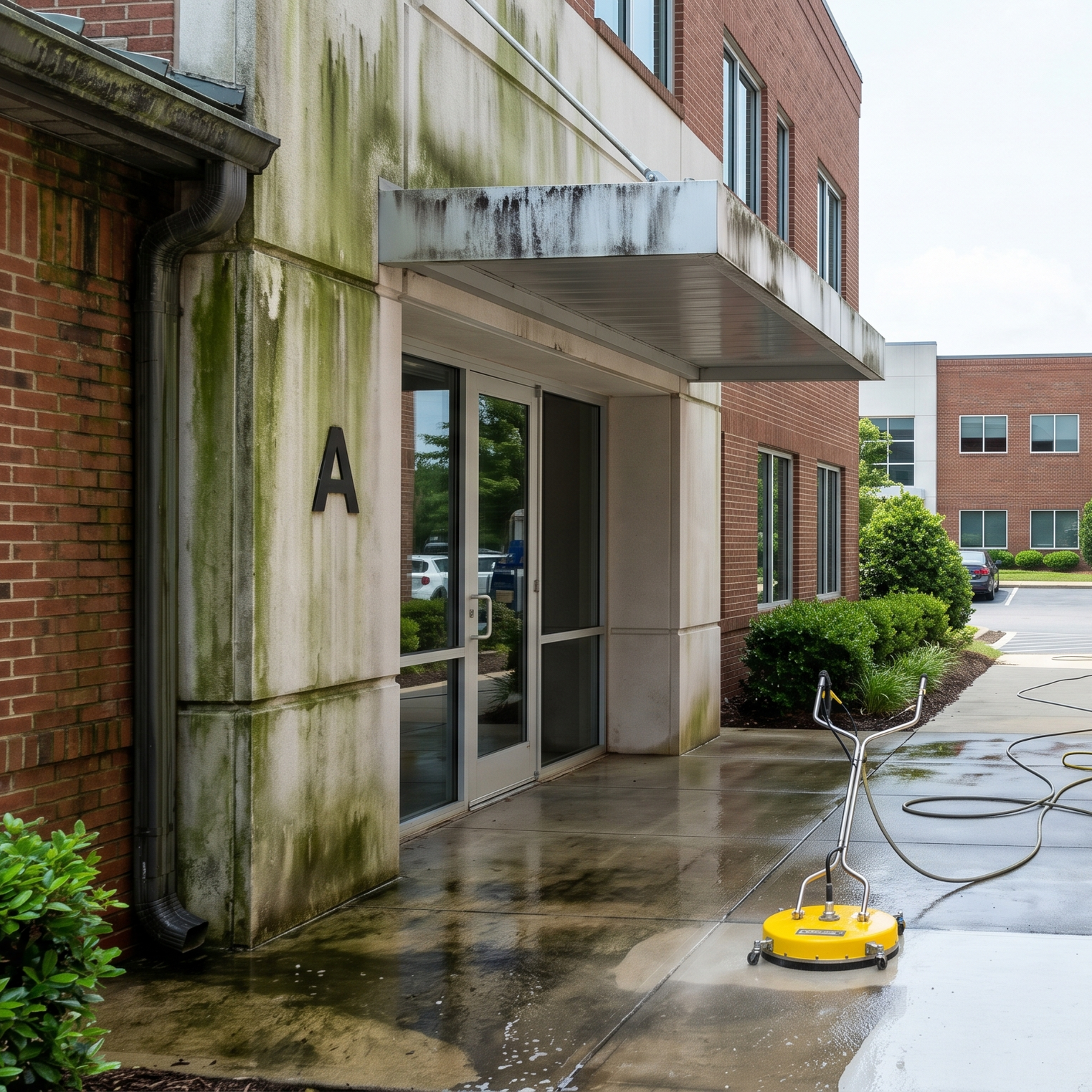
You walk the property on the first Monday of the quarter, clipboard in hand. The east-facing brick on Building A is mottled green where the gutters drip. The aluminum awning has a halo of black streaks the marketing team mentioned twice last month. Building B — across the lot, same age, same finish, same exposure — looks like a different property. White concrete. Clean panels. No streaks above the door.
Same construction year. Same chemistry hitting both surfaces. The only difference is the line item.
One of those buildings is on a recurring exterior contract. The other one calls a pressure-washing crew when something looks bad enough to draw a complaint.
The two models are different products, not different prices for the same product
A one-time wash and a recurring contract are not the same service at two price points. The pricing makes them look that way — an annual program quote lands near the total of two or three single visits, so it feels like a volume discount. It isn't. The two models are aimed at different problems.
A one-time wash is a reset. The crew shows up to a building already past the point where the surfaces look bad, removes the visible growth, and leaves. The clock starts over. Everything alive in the substrate — algae, mold, lichen — survives unless the crew used soft wash chemistry. Even then, the wind-blown spore load that put the colony there is still arriving every month.
A recurring contract is the opposite. The crew shows up before the surface looks bad, applies a shorter, less intense treatment to surfaces still close to baseline, and the building never gets to the point where a customer notices. The first visit may look similar to a one-time wash. Every visit after looks like a touch-up — because that's what it is.
The difference shows up in three places: what the crew does on the day of, what the surfaces look like at the worst point of the year, and what the total cost adds up to once you include the failures the one-time model produces.
What the math looks like when you put both on the same page
Here is the comparison most building owners never see laid out side by side. The numbers below assume a mid-size commercial property — roughly 8,000 square feet of facade, 12,000 square feet of concrete, gutters, and a small awning. Real quotes will vary by region, building height, and surface type.
| Line item | One-time annual wash | Quarterly recurring contract |
|---|---|---|
| Crew visit cost (per visit) | $1,800–$3,200 | $700–$1,400 |
| Visits per year | 1 | 4 |
| Annual crew cost | $1,800–$3,200 | $2,800–$5,600 |
| Surface condition at worst point of year | Heavy growth, visible staining | Light film, no visible staining |
| soft wash chemistry use | Full strength, long dwell | Reduced concentration, short dwell |
| Surface lifespan impact | Faster paint failure, granule loss, mortar erosion | Coatings last to manufacturer ratings |
| Emergency call risk | High during peak growth months | Low — surfaces never get there |
| Average tenant or customer complaints per year | 3–6 | 0–1 |
| Per-visit pricing predictability | Quote on the spot every time | Locked at contract signing |
The crew cost line is what most owners focus on, and it makes the one-time wash look cheaper. It isn't, once you put the rest of the column underneath it. The recurring model spends more on raw cleaning labor and less on everything else — chemistry per visit, surface degradation, emergency callouts, complaints from tenants, and the unplanned spend that comes from a wash that has to happen the week before a high-traffic event. Most properties land close to break-even on the cleaning labor itself. The savings are downstream.
A quick note on pricing structure. Recurring contracts usually come in two shapes — a locked annual fee broken into equal monthly or quarterly invoices, or a per-visit rate that's 20 to 30 percent below the one-time number, because the crew is doing less work each time and scheduling is predictable. Some vendors quote per square foot for very large or multi-site portfolios. The structure matters less than what's in writing: a fixed total, a defined scope per visit, and a re-treatment policy if growth returns inside the contract window.
Where the real money sits — the part not on the invoice
A facade that goes through a heavy growth cycle once a year ages faster than a facade that never gets there. The damage isn't dramatic in any single year. It's cumulative across the surface lifespan.
Painted metal panels are the clearest example. A panel exposed to wind, rain, and a full season of algae growth, then hit with a corrective pressure wash, loses topcoat thickness on every cycle. The same panel kept under a quarterly soft wash program keeps its topcoat for the entire manufacturer-rated lifespan, often fifteen to twenty-five years. Commercial repainting runs $2 to $4 per square foot — real money on a 20,000-square-foot building. Mortar joints in unpainted brick degrade the same way. Algae in the joint releases mild acids. The acids etch the mortar. A pressure wash removes the algae and a little bit of mortar with it. Five cycles in, the joints have visibly receded.
Concrete walking surfaces — entries, sidewalks, plazas — pick up oil drips, gum, organic staining, and algae through a slow accumulation that locks into the pores after about six months. Past that window, the stains shift from surface to embedded. Concrete resurfacing runs $3 to $5 per square foot in most markets. A property on quarterly visits never reaches the window. A property on annual visits crosses it every year.
The line item that captures all of this is on the budget two or three years out, not on the current month's invoice.
When a one-time wash is actually the right call
The recurring model isn't the right answer for every property. There's a real category where a one-time wash is what the building needs.
Pre-listing washes — when a property is going on the market, and the goal is to look right in the listing photos — are a one-time job by definition. The seller pays for the visible reset; whoever buys can set up a recurring program of their own.
Post-construction and storm cleanups are also one-time work. Mortar splatter, drywall mud, paint overspray, silt, and weather debris don't return on a regular cycle. A building with a planned exterior repaint or full re-clad in the next twelve months is in the same bucket — one corrective wash, then nothing, because the surface is about to be replaced anyway.
Small, fully shaded properties with low traffic and low organic load sometimes hold a baseline for two or three years between cleanings. Uncommon, but they exist. A one-time wash on a long cycle is the honest answer there.
Anywhere else, the math leans the other direction.
What a real recurring contract should include
Property managers learn the hard way that "recurring" can mean almost anything in a contract. A few things separate a real program from a discounted single service repackaged with a frequency.
A real recurring contract names the surfaces by category and lists the method for each one. Soft wash for the painted metal panels. Pressure wash with a surface cleaner for the concrete entries. Hand-cleaning for the awning. The crew knows which tank to load before the truck leaves the shop. A vague "exterior cleaning" line covers the company in writing and leaves the actual scope up to whoever shows up.
A real contract names the frequency by surface category, not by building. The roof on a once-a-year visit. The facade twice a year. The concrete approaches quarterly. The dumpster pad monthly. One building, four cadences, one contract. Bundling everything onto a single quarterly visit forces the wrong frequency on at least one surface.
A real contract names what gets re-treated if growth returns inside a defined window. soft wash work that fails inside ninety days gets corrected at no additional charge. Pressure-wash work, thirty days. A contract without those windows is a single service with a multiplier.
A real contract names who handles the irrigation around landscaping, who notifies tenants before the crew arrives, and who's responsible for the keys and access codes. These are the items that turn into friction at the third visit if they weren't named at the first one.
A real contract also names the paperwork. A current certificate of insurance on file with the property manager. Before-and-after photos after every visit. A weather-reschedule clause that moves the visit to the next slot, usually within seven to ten days, no additional charge. And for retail, restaurants, and medical offices, a scheduling window outside customer hours — early morning, late evening, or weekend — so the work happens when tenants aren't there.
A contract that doesn't name these things isn't a recurring program. It's a punch list with four visits on it.
How to set the right frequency for your building
The cadence that makes the recurring model work isn't standard across every property. It depends on what the surfaces actually do under your conditions.
Heavily shaded north-facing brick or stucco wants two soft wash visits a year — once in spring, once in early fall. The same surface in full sun can hold one annual visit. Concrete entries and high-traffic walkways require quarterly visits at a minimum, because gum and organic staining lock into the pores fast, and the crew can't reach embedded stains with a single annual pass.
Painted metal panels above grade want one soft wash visit a year, if the gutters are clean — twice if the gutters drip onto the panels below. Awnings, sign faces, and storefront glass need monthly or every-other-month attention on a high-traffic corridor. Letting it slip turns into a stripping job on day ninety.
Dumpster pads and back-of-house concrete need a hot-water pressure wash with a degreaser on a frequency that matches kitchen output, anywhere from monthly to weekly for restaurants and food-service tenants.
The crew quoting the contract should be able to walk the building, point at each surface, and tell you the cadence that surface specifically needs. If the quote is one cadence for the whole building, the company isn't reading the property — they're selling a SKU.
What recurring contracts actually save (and what they don't)
Recurring contracts save three things consistently. The cost of repainting, repointing, and refinishing surfaces that would otherwise age faster than their rating. The cost of emergency wash callouts before high-traffic events, board meetings, or tenant tours. The cost of complaints from customers, tenants, or the leasing office about how the property looks.
They don't save on the line-item cleaning labor itself. The total annual crew cost is usually higher under a recurring program. That's the trade — more crew labor per year, less repair labor across the surface lifespan, and a property that never gets to the point where the appearance is a problem.
Multi-site portfolios get an extra layer of savings. A manager running ten storefronts under one recurring agreement pays less per site than ten separate one-time vendors, because the crew schedules a route instead of separate truck rolls. One COI covers the portfolio. One contact line handles every site.
The buildings that look right year-round are the buildings paying for it on the schedule. The buildings that look right for six weeks after their annual wash and slowly worse for the other forty-six weeks are paying for it in surface damage and emergency calls instead.
Knowing which column your property belongs in is the part most owners haven't run the math on. You can request a walk-through and a commercial cleaning scope that names the cadence per surface — not one number for the whole building.
Frequently Asked Questions
The cheaper invoice isn't always the cheaper building
A property manager comparing two quotes — one annual wash, one quarterly contract — looks at the annual cost and picks the lower number. That's the part the one-time model is priced to win on.
The buildings that look right at the worst point of the year, hold their finishes to their manufacturer ratings, and never get an emergency callout aren't the ones with the lower cleaning invoice. They're the ones with the cleaning invoice that shows up four times a year and the maintenance budget without a "repaint sooner than planned" line in it.
The recurring contract isn't always the right answer. When it is, it's not close.
Superior Power Washing builds recurring commercial maintenance programs and one-time corrective washes across Waldorf, MD, and all of Charles County and Southern Maryland — including Upper Marlboro, Accokeek, Clinton, Fort Washington, and Prince Frederick. Owner-operated, fully insured, with cadences quoted per surface, not per building. Call (240) 901-4252 for a free on-site assessment.
