
What Causes Green or Black Stains on a Roof?
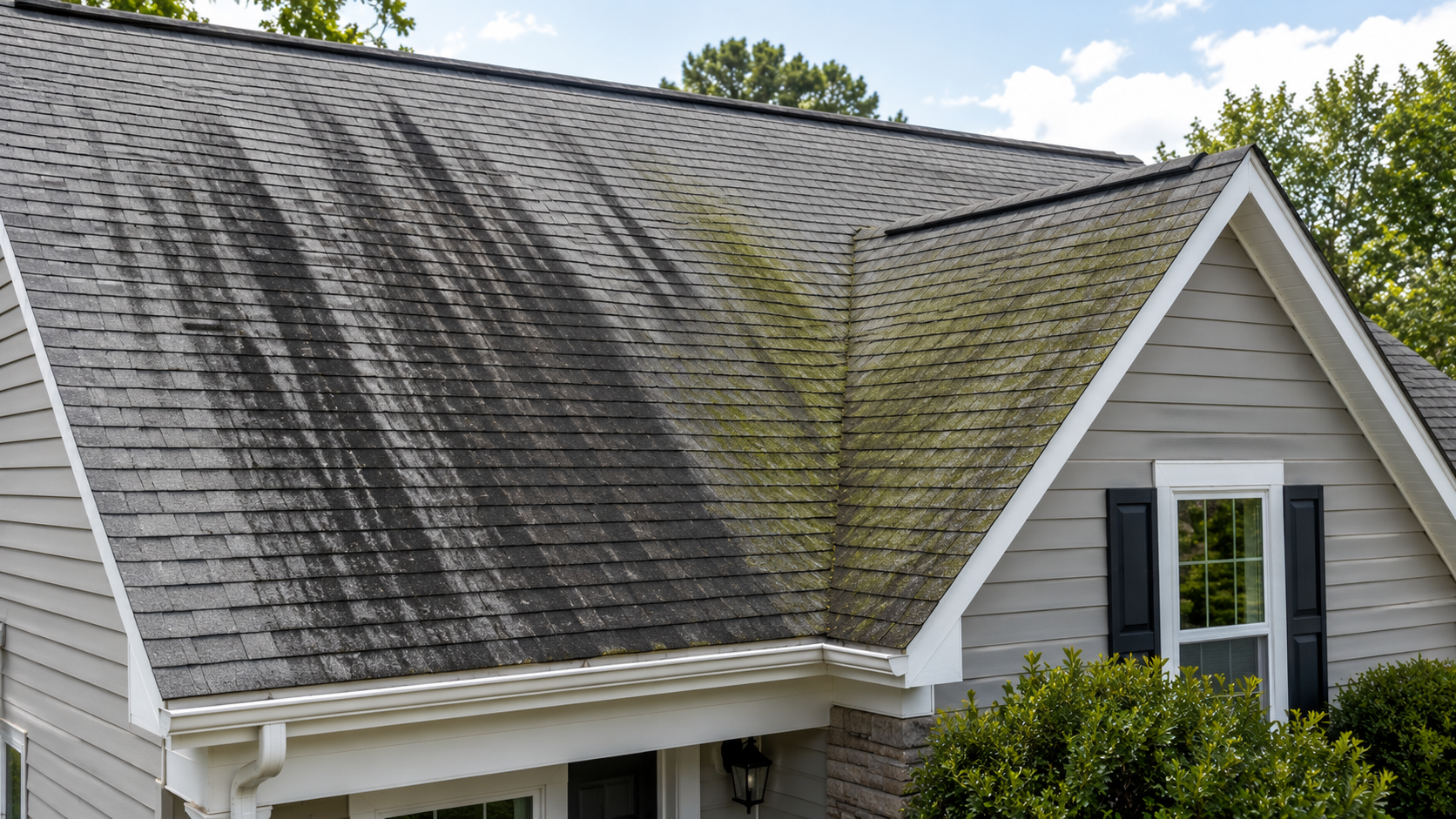
Quick Answer: Green or black stains on a roof are caused by organic growth: black streaks are typically algae (a blue-green algae that appears black and streaks downward), green stains and patches are often algae or moss, and dark growth can also include mold or mildew. These grow on roofs where there's moisture, shade, and humidity — feeding on moisture and the shingle materials — and thrive in damp, shaded areas and humid climates. Moss is a thicker green growth that can be especially damaging, holding moisture against the roof. The growth is unsightly and can affect the shingles over time. The safe way to remove it is soft washing — low pressure and cleaning solutions — since pressure washing damages roofs.
A roof streaked or patched with green or black isn't just weathered — those stains are living organic growth, and the color often hints at what's growing. Algae, mold, and moss all stain roofs, thrive in similar damp conditions, and can affect the roof over time. Understanding what causes the green and black stains, and how to safely clean them, helps you restore and protect your roof. Here's what those colors mean and what to do.
The Stains Are Organic Growth
The first thing to understand is that green or black roof stains are organic growth — algae, mold, mildew, or moss — not ordinary dirt or simple discoloration. These organisms grow on the roof surface, feeding on moisture and the materials in the shingles, and they appear as stains and patches in various colors. So the stains are alive and growing, which is why they spread and worsen over time rather than staying fixed. The specific color and appearance often indicate the type of growth, though they share common causes: moisture, shade, and humidity. Recognizing the stains as growth is the key to understanding both why they form and how to remove them.
Black Stains: Usually Algae
Dark black stains and streaks on a roof are typically caused by algae — specifically a blue-green algae that appears black and commonly forms streaks running down the roof. As rainwater runs down, it spreads the algae into the characteristic downward black streaks. This algae is very common on asphalt shingle roofs, especially in humid climates, and it's the usual culprit behind the dark streaks people notice. So when you see black streaking on a roof, algae is almost always the cause. It feeds on moisture and shingle materials and spreads with water flow, which gives it the streaky black appearance that's so recognizable.
| Stain color/type | Likely growth |
|---|---|
| Black streaks | Algae (blue-green algae appearing black) |
| Green stains/patches | Algae or moss |
| Dark patches | Mold or mildew |
| Thick green growth | Moss (can be damaging) |
Green Stains: Algae or Moss
Green stains and patches on a roof are often algae or moss. Algae can appear greenish as well as black, and moss is a thicker, green growth that forms on roofs in damp, shaded conditions. Moss in particular is worth noting because it's a denser growth that holds moisture against the roof and can be especially damaging to shingles over time, as it traps water and can work between and lift shingles. So green growth on a roof may be algae or, when it's thicker and more plant-like, moss, with moss being the more concerning for the roof's condition. Both green algae and moss thrive in the same damp, shaded, humid conditions, growing where the roof stays wet and gets little sun. Green growth, especially moss, signals damp conditions on the roof.
Why It Grows and Where
All these growths — algae, mold, mildew, moss — share the same favorable conditions: moisture, shade, and humidity. They thrive in humid climates with abundant moisture, and in the damp, shaded areas of a roof that don't dry quickly, like north-facing slopes and sections under trees. Sun and dryness discourage them, so the shaded, moist spots are where they flourish. Trees over the roof contribute by providing shade and dropping debris that holds moisture. So the green or black stains concentrate where the roof stays damp and shaded, which is why they're often worst on certain sections. The conditions drive the growth, which is why humid climates and shaded roofs see the most staining.
How to Clean It Safely
Whatever the color, the safe way to remove green or black roof stains is soft washing — not pressure washing. Soft washing uses low pressure combined with cleaning solutions that kill and remove the algae, mold, mildew, and moss at the source, without the high force that would damage the roof. This is essential because a roof should not be pressure-washed — the force can blast away shingle granules and damage the roof. Soft washing removes the growth and the stains safely while protecting the shingles. For moss, especially, which can be thick and damaging, proper removal matters. So to clean green or black stains off a roof, soft washing — ideally professional, with the right solutions and safety measures — is the correct, safe approach.
Don't pressure wash a roof to remove green or black stains. High pressure can blast away shingle granules and damage the roof, and walking on a roof to clean it is dangerous. Roofs should be soft washed, which removes algae, moss, and other growth safely with low pressure and cleaning solutions, ideally by a professional with the proper equipment and safety measures.
Why It's Worth Removing
Green and black roof stains are worth addressing for both appearance and protection. The growth is unsightly and detracts from curb appeal, and it spreads and worsens over time. More importantly, the growth can affect the shingles — moss in particular holds moisture against the roof and can damage shingles, while algae can affect them over the long term. So removing the growth helps protect the roof, not just clean it up. Because soft washing is the safe method and roof cleaning is best done with proper equipment and safety, having a professional soft wash the roof removes the green and black stains safely and effectively, restoring the roof's appearance and protecting the shingles from the growth.
Frequently Asked Questions
They're related but often different growths. Black streaks are typically algae (a blue-green algae that appears black and forms downward streaks). Green stains and patches are often algae, appearing greenish or moss — a thicker green growth. Dark patches can be mold or mildew. So the colors can indicate different organisms, though all are organic growth thriving in the same damp, shaded, humid conditions.
Yes, moss can be especially problematic. It's a thicker, denser green growth that holds moisture against the roof and can be damaging to shingles over time, trapping water and potentially working between and lifting shingles. So green growth that's thick and plant-like (moss) is more concerning for the roof's condition than a thin algae stain. Removing moss safely with soft washing helps protect the roof.
Because algae, mold, mildew, and moss thrive in moisture, shade, and humidity. They grow on the damp, shaded areas of a roof that don't dry quickly — north-facing slopes and sections under trees — and in humid climates. Sun and dryness discourage them. So the green or black stains concentrate where the roof stays damp and shaded, which is why the growth is often worse on those specific sections.
Soft washing is the safe method — it uses low pressure plus cleaning solutions that kill and remove the algae, mold, mildew, and moss at the source, without the high force that would damage the roof. A roof should not be pressure-washed, as that can damage shingles. So for green or black roof stains, soft washing removes the growth and stains safely while protecting the roof, ideally done professionally with proper solutions and safety measures.
No, you shouldn't. High pressure can blast away the protective granules on shingles and damage the roof, and climbing onto a roof to clean it is dangerous. Roofs should be soft-washed instead, which removes algae, moss, and other growth safely with low pressure and cleaning solutions. Pressure washing a roof risks costly damage, which is why soft washing is the correct method for roof stains.
Know the Stains, Clean Them Safely
Green or black stains on a roof are organic growth — black streaks usually algae, green patches algae or moss, dark spots mold or mildew — thriving where the roof stays damp, shaded, and humid. The growth spreads and can affect the shingles, with moss especially damaging. The safe way to remove it is soft washing, using low pressure and cleaning solutions that kill and remove the growth without harming the roof, since pressure washing damages shingles. Have the roof soft-washed professionally for safe, lasting results.
Green or black stains on your roof? — Get them removed safely with soft washing that protects your shingles. Superior Power Washing serves Waldorf, La Plata, Clinton. Call (240) 901-4252.
