
Why Is Algae and Mold Growing on Your Siding?
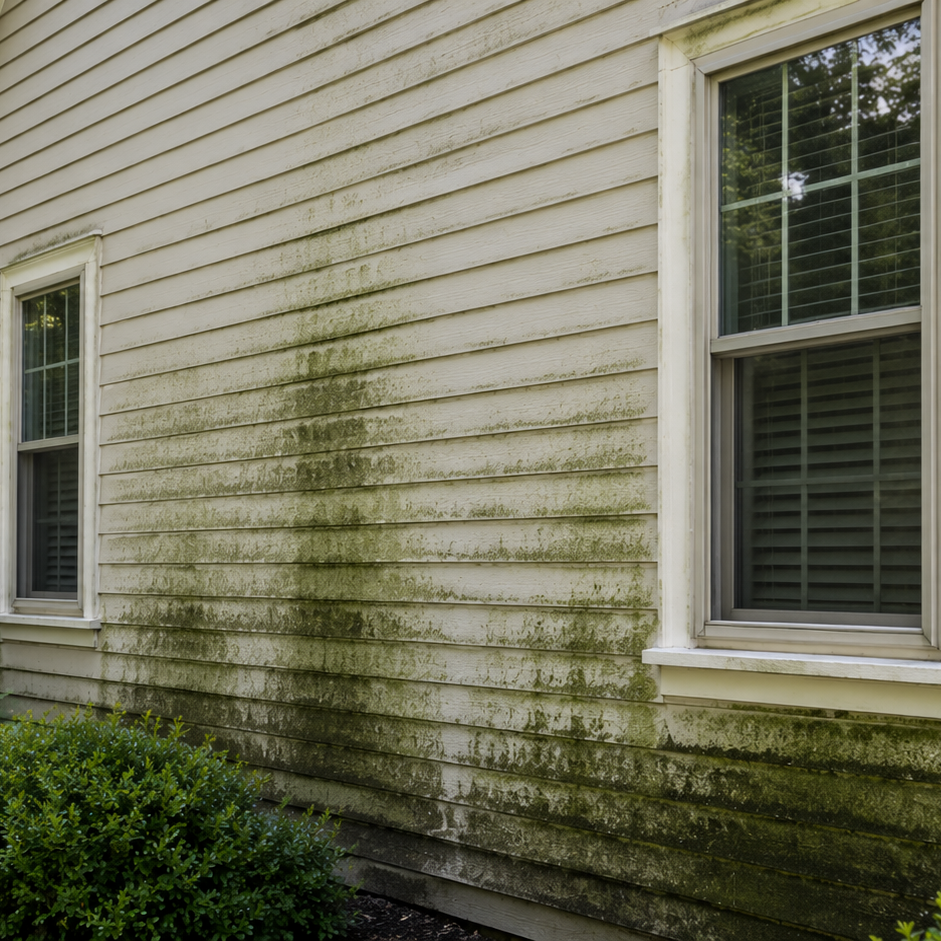
Quick Answer: Algae and mold grow on siding where there's moisture, shade, and organic material to feed on — conditions common in humid climates and on shaded, north-facing, or tree-covered walls. The growth feeds on moisture and the dirt, pollen, and organic matter on the siding, and it spreads as green, black, or dark patches and streaks. Areas that stay damp and don't get much sun are the most prone. To remove it: soft washing is the safe, effective method, using low pressure and cleaning solutions that kill and remove the algae and mold without damaging the siding. To prevent it: address moisture sources, keep the siding clean, and trim back vegetation that holds moisture against the walls. High-pressure washing risks damaging siding, so soft washing is preferred.
If your siding has developed green, black, or dark patches and streaks, you're likely looking at algae and mold growth — a common problem, especially in humid climates and shaded areas. It's not just unsightly; it indicates conditions on your siding that favor growth, and it spreads if left alone. Understanding why algae and mold grow on siding, and how to safely remove and prevent them, helps you keep your home's exterior clean. Here's what's going on.
Why Algae and Mold Grow on Siding
Algae and mold are forms of growth that need specific conditions to thrive: moisture, shade, and organic material to feed on. Siding provides a surface where these can develop when the conditions are right. The growth feeds on the moisture present and the dirt, pollen, and organic matter that accumulate on the siding, using them as nutrients. So algae and mold growth on siding is essentially the result of moisture and organic material on a surface that doesn't dry out quickly. This is why the growth is so common in humid climates, where there's abundant moisture, and on parts of the home that stay damp and shaded. The conditions, not the siding itself, are what allow the growth.
Where It Grows Most
Algae and mold don't grow evenly across a home — they concentrate where conditions are dampest and shadiest. The most prone areas are walls that stay moist and don't get much sun: shaded, north-facing sides of the house, areas under eaves or overhangs, spots with poor air circulation, and places near moisture sources or vegetation that keeps the siding damp. Sun and air movement dry surfaces and discourage growth, so the shaded, still, damp spots are where algae and mold flourish. Trees and dense vegetation near the house contribute by providing shade and holding moisture against the walls. So, if your siding's growth is worst on the shaded, north-facing, or tree-covered areas, that's because those spots stay damp, pointing to the moisture-and-shade conditions driving it.
| Mold/algae-prone area | Why |
|---|---|
| North-facing/shaded walls | Little sun, stays damp |
| Under eaves and overhangs | Sheltered, poorly ventilated |
| Near vegetation or trees | Shade and moisture against the wall |
| Poorly ventilated spots | Air doesn't dry the surface |
| Humid climate overall | Abundant moisture feeds growth |
How to Remove It Safely
Removing algae and mold from siding is best done with soft washing — and the method matters, because high pressure can damage siding. Soft washing uses low pressure combined with cleaning solutions that kill and remove the algae, mold, and dirt at the source, without the force that could crack siding or force water behind it. This makes soft washing the safe, effective way to clean siding, addressing the growth thoroughly by killing it rather than just blasting it off. By contrast, pressure washing siding with high force risks damaging it, which is why soft washing is the preferred method for siding. So to remove algae and mold from siding safely, soft washing is the approach, ideally done professionally with the right solutions and technique.
How to Prevent It From Coming Back
Removing the growth is only half the job — preventing its return means addressing the conditions that feed it. Since algae and mold need moisture and shade, reducing those helps. Address moisture sources: ensure good drainage, fix anything keeping the siding wet, and improve air circulation where possible so the siding dries. Keep the siding clean of the dirt and organic matter that growth feeds on. And trim back trees and vegetation that shade the walls and hold moisture against them, letting more sun and air reach the siding. In a humid climate, where moisture is constant, these steps plus periodic cleaning are what keep algae and mold from quickly returning. So the lasting approach combines safe removal with managing the moisture and conditions that allow the growth.
Trace the worst growth back to its moisture source. If algae and mold are heaviest where a shrub presses against the siding, under a leaky gutter, or on a wall that never gets sun, addressing that specific condition — trimming the plant, fixing the gutter, improving airflow — does more to prevent regrowth than cleaning alone.
Why It's Worth Addressing
Algae and mold on siding are worth addressing for a few reasons. Beyond the unsightly appearance that detracts from curb appeal, the growth indicates moisture on your siding, and, left unchecked, it can spread and contribute to its deterioration over time. Mold growth is also generally something homeowners want to remove from their home's exterior. So, cleaning the algae and mold off — safely, with soft washing — and addressing moisture conditions both restore the appearance and protect the siding. Because soft washing is the safe method and addressing underlying conditions is key to preventing regrowth, a professional can clean the siding properly and advise on prevention, keeping your home's exterior clean and protected.
Frequently Asked Questions
Because there's moisture, shade, and organic material for it to feed on. The growth feeds on moisture and the dirt, pollen, and organic matter on the siding, thriving where the surface stays damp and doesn't get much sun. This is common in humid climates and on shaded, north-facing, or tree-covered walls. The conditions — moisture and shade — are what allow algae and mold to grow on siding.
In the dampest, shadiest, least-ventilated areas that don't dry quickly: north-facing or shaded walls, spots under eaves and overhangs, areas near vegetation or trees, and poorly ventilated spots. Sun and air movement dry surfaces and discourage growth, so it concentrates where the siding stays damp and still. Trees and dense vegetation contribute by providing shade and holding moisture against the walls.
Soft washing is the safe, effective method — it uses low pressure plus cleaning solutions that kill and remove the algae, mold, and dirt at the source without the force that could damage siding. High-pressure washing risks cracking siding or forcing water behind it, so soft washing is preferred for siding. For safe, thorough removal, soft washing done with the right solutions and technique, ideally professionally, is the approach.
It's not recommended. High pressure can crack or damage siding or force water behind it, leading to moisture problems. Soft washing is the safer method, using low pressure and cleaning solutions to remove the mold and algae without that risk. So while pressure washing might seem powerful, it can harm siding — soft washing cleans it effectively and safely, which is why it's the preferred method.
Address the conditions that feed it: ensure good drainage and fix anything keeping the siding wet, improve air circulation so the siding dries, keep the siding clean of dirt and organic matter, and trim back trees and vegetation that shade the walls and hold moisture against them. In humid climates, these steps plus periodic cleaning keep algae and mold from quickly returning, since reducing moisture and shade removes what the growth needs.
It's worth addressing. Beyond the unsightly appearance, the growth indicates moisture conditions on your siding, and left unchecked, it spreads and can contribute to the siding deteriorating over time. Mold is also generally something homeowners want to remove from their home's exterior. Cleaning it off safely with soft washing and addressing moisture conditions both restore the appearance and help protect the siding.
Stop the Moisture to Stop the Growth
Algae and mold grow on siding where moisture, shade, and organic material combine — common in humid climates and on shaded, north-facing, or tree-covered walls. The growth spreads and can degrade siding if ignored. The safe way to remove it is soft washing, which kills and removes it at low pressure using cleaning solutions without damaging the siding, whereas high pressure can cause harm. Pair safe removal with managing the moisture and shade that feed it, and your siding stays clean.
Algae or mold growing on your siding? — Get it soft washed safely and the moisture conditions addressed. Superior Power Washing serves Waldorf, La Plata, Clinton. Call (240) 901-4252.
