
Soft Washing vs. Pressure Washing: What’s the Difference?
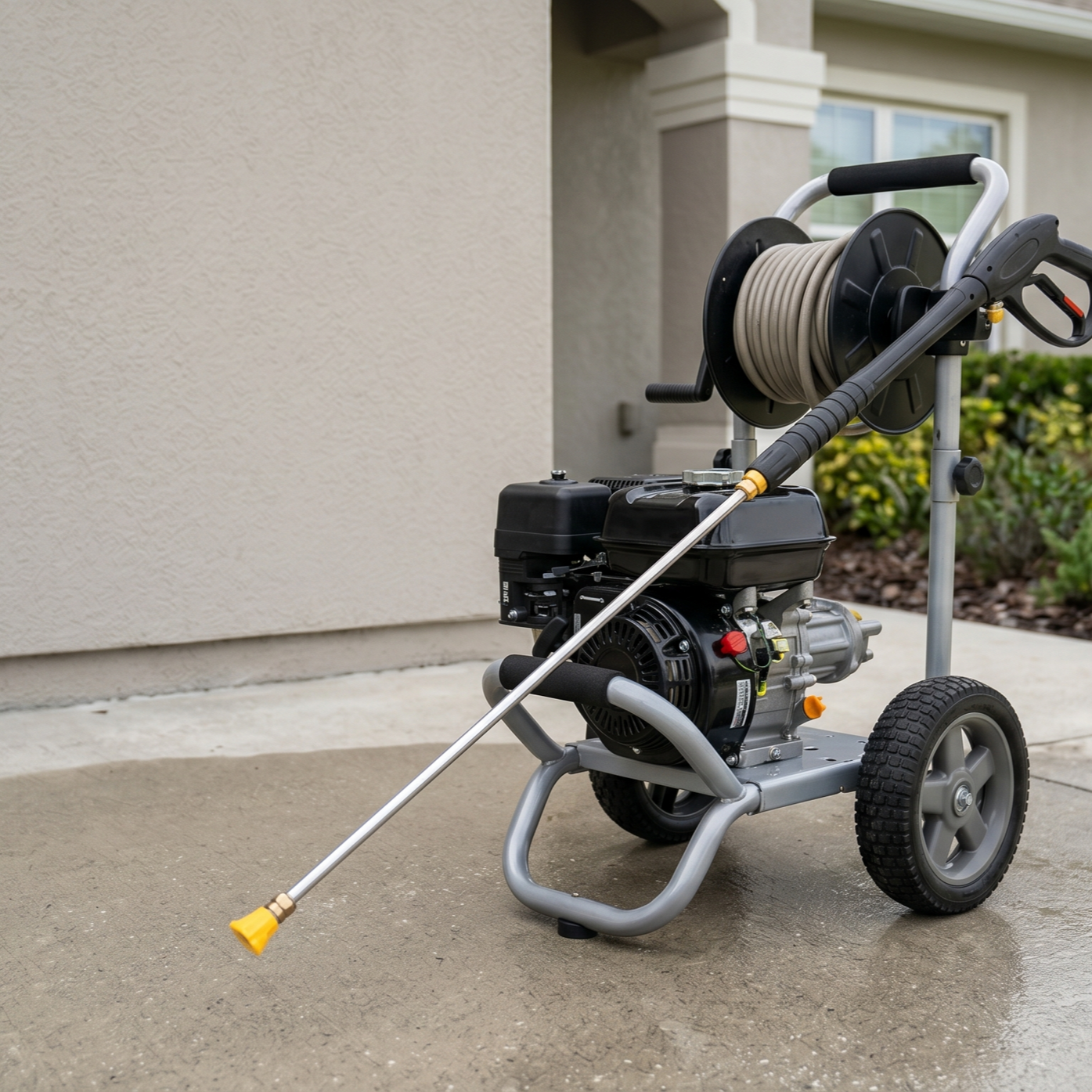
Quick Answer: Pressure washing uses high-pressure water to blast away dirt, grime, and stains, which works well on hard, durable surfaces like concrete driveways, sidewalks, and patios. Soft washing uses low pressure combined with specialized cleaning solutions that kill and remove algae, mold, mildew, and dirt without the force of high pressure — making it the safe choice for more delicate surfaces like roofs, siding, and painted areas that high pressure could damage. The key difference is high force versus low pressure with cleaning solutions. Using the wrong method matters: pressure washing delicate surfaces like a roof or siding can cause real damage, which is why soft washing is preferred for those. Matching the method to the surface protects your home while getting it clean.
Cleaning your home's exterior can be done in more than one way — and choosing the right one matters not just for results but for protecting your surfaces. The two main approaches, pressure washing and soft washing, work very differently and suit different surfaces. Using the wrong one can damage your home. Understanding the difference helps you know which surfaces you need. Here's the comparison.
How Pressure Washing Works
Pressure washing uses a high-pressure stream of water to blast away dirt, grime, mildew, and stains from a surface. The force of the water does the cleaning, physically removing buildup. This high-pressure approach is effective and appropriate for hard, durable surfaces that can withstand the force, like concrete driveways, sidewalks, patios, and other tough surfaces. On these, the strong water pressure cleans efficiently without harming the surface. So pressure washing is the powerful, force-based method, well-suited to tough, hard surfaces that can take the pressure. The strength that makes it effective on concrete, though, is exactly what makes it risky on more delicate surfaces.
How Soft Washing Works
Soft washing takes a gentler approach. It uses low pressure — far less forceful than pressure washing — combined with specialized cleaning solutions. Rather than relying on force, soft washing uses cleaning solutions to do the work: they kill and remove algae, mold, mildew, and dirt at the source, and low-pressure water rinses them away. Because it doesn't use high pressure, soft washing won't damage the surfaces it cleans, making it safe for more delicate areas. The cleaning solutions also address the organic growth (like algae and mold) more thoroughly by killing it, rather than just blasting it off. So soft washing is the gentle, solution-based method, designed to clean effectively without the force that can damage surfaces.
| Factor | Pressure Washing | Soft Washing |
|---|---|---|
| Method | High-pressure water | Low pressure plus cleaning solutions |
| Cleans by | Force of the water | Solutions kill/remove growth |
| Best for | Concrete, driveways, sidewalks, patios | Roofs, siding, delicate surfaces |
| Risk to delicate surfaces | Can damage | Safe |
| Addresses algae/mold | Blasts off | Kills at the source |
Which Surfaces Need Which
Matching the method to the surface is the heart of the decision. Hard, durable surfaces — concrete driveways, sidewalks, patios — can handle and benefit from pressure washing's force. Delicate or more easily damaged surfaces — roofs, siding (including vinyl and other types), painted surfaces, and similar — should be soft-washed, because high pressure could damage them. A roof, in particular, should not be pressure-washed, as the force can damage shingles; soft washing safely cleans roofs instead. Siding can be damaged or have water forced behind it by high pressure, so soft washing is the safer choice there, too. So the rule of thumb is: pressure washing for tough surfaces that can take it, soft washing for delicate surfaces that can't. The surface determines the method.
Why Using the Wrong Method Causes Damage
The reason this distinction matters so much is that using the wrong method can genuinely damage your home. Pressure washing a delicate surface like a roof can blast away the protective granules on shingles, damaging them and shortening the roof's life. On siding, high pressure can crack, damage, or force water behind the siding, leading to moisture problems. On painted surfaces, it can strip or damage the paint. So the force that cleans concrete so well becomes destructive on surfaces that aren't built for it. This is why soft washing exists — to clean those delicate surfaces safely. Using pressure washing where soft washing is called for risks costly damage, which is the opposite of what you want from cleaning your home. Matching the method to the surface protects it.
Don't pressure wash your roof. The high pressure can blast away shingle granules and damage the roof, shortening its life — and walking on a roof to clean it is dangerous. Roofs should be soft washed, which cleans algae, mold, and stains safely with low pressure and cleaning solutions, ideally by a professional with the proper equipment and safety measures.
Why a Professional Gets It Right
Because each method suits different surfaces and using the wrong one can damage your home, having a professional handle exterior cleaning ensures the right method is used on each surface. A professional knows to pressure wash the concrete and soft wash the roof and siding, uses the appropriate cleaning solutions for soft washing, and has the equipment and experience to do both safely and effectively — including the safety measures for working on or around a roof. This protects your home while getting it properly clean. So rather than risk damaging a delicate surface with the wrong method, a professional matches the approach to each surface, delivering clean results without the harm that comes from misapplying high pressure.
Frequently Asked Questions
Pressure washing uses high-pressure water to blast away dirt and stains, suited to hard surfaces like concrete. Soft washing uses low pressure plus specialized cleaning solutions that kill and remove algae, mold, and dirt without high force, making it safe for delicate surfaces like roofs and siding. The key difference is high force versus low pressure with cleaning solutions, and each suits different surfaces.
Hard, durable surfaces that can withstand the force — concrete driveways, sidewalks, patios, and similar tough surfaces. On these, high pressure cleans efficiently without harming the surface. Pressure washing is well-suited to tough surfaces but risky on delicate ones, so it's used for the tough surfaces, while soft washing handles the more delicate areas like roofs and siding.
Because the high pressure can blast away the protective granules on shingles and damage the roof, shortening its life. Walking on a roof to clean it is also dangerous. Roofs should be soft-washed instead, which cleans algae, mold, and stains safely using low pressure and cleaning solutions. Pressure washing a roof risks costly damage, which is why soft washing is the right method for roofs.
Yes, soft washing is the safe choice for siding. High pressure can crack or damage siding or force water behind it, leading to moisture problems, whereas soft washing's low pressure and cleaning solutions clean the siding effectively without that risk. So for siding — including vinyl and other types — soft washing is preferred over pressure washing to clean it safely while removing algae, mold, and dirt.
Yes, and it addresses them well. Soft washing uses cleaning solutions that kill and remove algae, mold, mildew, and dirt at the source, rather than just blasting them off. The low-pressure water then rinses them away. Because it kills the organic growth, soft washing can address algae and mold more thoroughly on delicate surfaces, which is part of why it's preferred for roofs and siding.
Because using the wrong method can damage your home. Pressure washing a delicate surface like a roof or siding can damage shingles, crack siding, force water behind it, or strip paint — the force that cleans concrete becomes destructive on surfaces not built for it. Soft washing exists to clean those delicate surfaces safely. Matching the method to the surface protects your home while getting it clean.
The Right Method for Each Surface
Pressure washing and soft washing aren't interchangeable — pressure washing's high force suits tough surfaces like concrete, while soft washing's low pressure and cleaning solutions safely clean delicate surfaces like roofs and siding. Using the wrong method, like pressure washing a roof, can cause real damage. Matching the method to the surface gets your home clean without harming it, which is why a professional uses each approach where it belongs.
Want your home's exterior cleaned safely? — Get the right method for each surface, from pressure washing to soft washing. Superior Power Washing serves Waldorf, La Plata, Clinton. Call (240) 901-4252.
