
Why Algae Grows Back So Fast After a Standard Pressure Wash
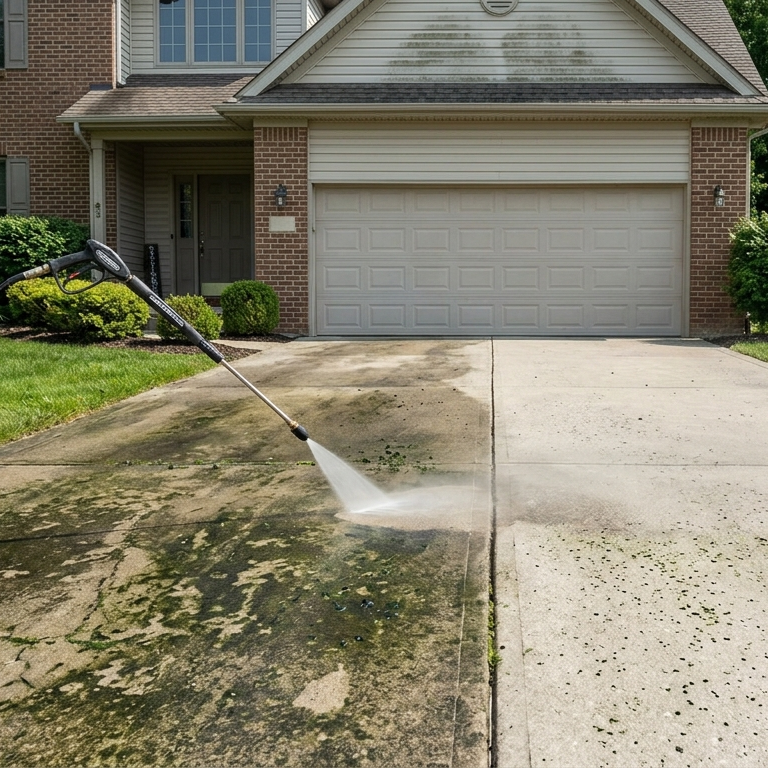
You paid for a pressure wash. The crew showed up, blasted the roof, the siding, the patio — the whole property looked like a different home by the time they pulled out of the driveway. Six weeks later, the green tint is back on the north side of the house. Eight weeks in, the patio is starting to feel slick again. By the third month, the roof streaks are visible again from the driveway.
Same problem. Same crew. Same wasted weekend.
Here's why it happens.
A pressure wash hits the surface. The algae lives below it.
Algae is a living organism, not a stain. A stain sits on top of a surface. A living organism roots into it — sends cells down into the cracks, the pores, the substrate underneath the visible layer. On a roof shingle, the algae works its way under the granules. On vinyl siding, it embeds into the textured grain of the panel. On a concrete patio, it lives in the pores of the cement matrix, well below the visible surface.
A pressure washer pushes water at a few thousand PSI. That's enough to knock the visible layer — the part you see as green tint or black streak — clean off the surface. The surface looks bright when the water dries. The cells embedded beneath the surface aren't touched. They survive.
Within a couple of weeks, those cells start reproducing again. The colony rebuilds from the inside out. Six to eight weeks later, the visible color is back.
What you don't see is what kills the result
Here's the table that helps:
| What the pressure wash removed | What was left behind | How long until regrowth shows |
|---|---|---|
| Visible algae streaks on the roof shingles | Cells embedded under and between granules | 6–12 weeks on shaded slopes |
| Green tint on north-facing siding | Cells in the textured grain of the vinyl | 4–8 weeks in humid months |
| Slimy algae layer on patio concrete | Cells in the porous concrete matrix | 2–6 weeks in shaded areas |
| Mossy patches between pavers | Spores and root structures in joint sand | Through one rainy season |
A pressure wash is a removal job, not a kill job. It's the difference between mowing the grass and pulling the roots.
Soft washing kills what pressure washing only knocks loose
A soft wash isn't a milder pressure wash. It's a completely different process.
The crew sprays the surface with a biocide solution — typically sodium hypochlorite combined with a surfactant that helps it cling to vertical surfaces and penetrate textured ones. The pressure is barely more than a garden hose. The cleaning isn't done by water force. It's done by the chemistry sitting on the surface for ten to fifteen minutes, killing the algae at the cellular level.
After the dwell time, the surface gets rinsed at low pressure. The dead algae release from the surface over the next several rains. Most surfaces look noticeably cleaner immediately, and noticeably cleaner-cleaner over the following week as the dead organism dissolves and washes away.
The difference is permanent in a way that pressure washing isn't. The cells in the substrate get killed too — the biocide soaks in and reaches them. Nothing's left alive to repopulate from. A soft washed roof typically holds clean for two to four years. A pressure-washed roof, by comparison, often shows visible regrowth within the same season.
Sometimes the surface looks *worse* a few weeks later
This is the part that surprises homeowners. A roof or siding panel that's been pressure washed will sometimes show more visible algae growth in the months afterward than it had before. Two reasons for it.
The first is that the pressure wash strips protective surface treatments. On asphalt shingles, it blasts off granules — the same granules that protect the asphalt from UV exposure and make it harder for algae to anchor. On vinyl siding, it can damage the textured surface coating that resists algae adhesion. With those protections gone, the next colony establishes faster than the first one did.
The second is that the pressure wash spreads spores around. Cells that were concentrated in a streak get scattered across previously clean shingles, siding panels, or patio sections. The visible streak disappears — and reseeds itself over 20 square feet of previously clean surface.
The pressure wash didn't just fail to fix the problem. It made the next iteration of the problem worse.
What about the chlorine bleach trick?
A lot of people look at the label on a jug of pool chlorine, recognize sodium hypochlorite as the active ingredient in professional soft wash, and figure they can do it themselves with a pump sprayer from the hardware store.
The active ingredient is the same. The concentration, dwell time, surfactant chemistry, and rinse process aren't. Household bleach is around 5% sodium hypochlorite. Professional soft wash solutions run higher — usually 6–12% — and get diluted on the spot to whatever the specific surface and growth type calls for. Too weak, and the algae survives. Too strong and you damage the surface, kill the landscaping, and burn nearby paint.
Surfactants are the other half. The chemistry that helps the solution cling to a vertical surface and penetrate the substrate is what makes the dwell time work. Without it, the bleach runs off in twenty seconds and never reaches the cells in the substrate.
DIY soft washing is the kind of thing that almost works — clears the visible streak, then regrows in three months because the dwell time wasn't long enough to kill what's below the surface. The homeowner ends up back where they started, plus the cost of the chemical and the weekend.
How fast does soft washing actually clear the streaks
The visible streak doesn't disappear the moment the biocide hits the surface. Most surfaces look noticeably cleaner immediately, but not fully clean. The remaining color fades over the next week to a month as the dead algae continues to break down and rain washes it off.
Patios and concrete clear fastest — usually within hours of application — because the surface holds less embedded biomass than a roof or textured siding. Roofs take the longest. The shingles often still look streaked two weeks after a soft wash, and then suddenly look clean after a heavy rain. That's the dead organism finally releasing.
This is one of the reasons soft washing is sometimes oversold by companies that want a dramatic before-and-after photo on the day of. A real soft wash earns the cleanest result a few weeks after the work, not on the day of.
Frequently Asked Questions
The shortest distance between two cleanings is killing the algae the first time.
A pressure wash gets paid for like it's buying a clean roof for the next few years. What it actually buys is a clean roof for the next few weeks. The math only starts to make sense when the wash kills the organism rather than just relocating it.
If the company quoting your job can't explain the difference between knocking algae off a surface and killing it in the substrate, that company is selling the wrong product for the problem you have. The right product is a soft wash applied at the correct concentration with enough dwell time to reach the cells under the surface.
The wash that lasts isn't the one with the most pressure. It's the one with the right chemistry.
Superior Power Washing uses professional soft wash biocide on every roof and algae-prone surface across Waldorf, MD, and all of Charles County and Southern Maryland — including La Plata, Clinton, Fort Washington, White Plains, and Brandywine. Owner-operated, fully insured, results that hold for years instead of weeks. Call (240) 901-4252 for a free on-site assessment.
