
Why Your Patio and Pool Deck Turn Slippery (And the Fix)
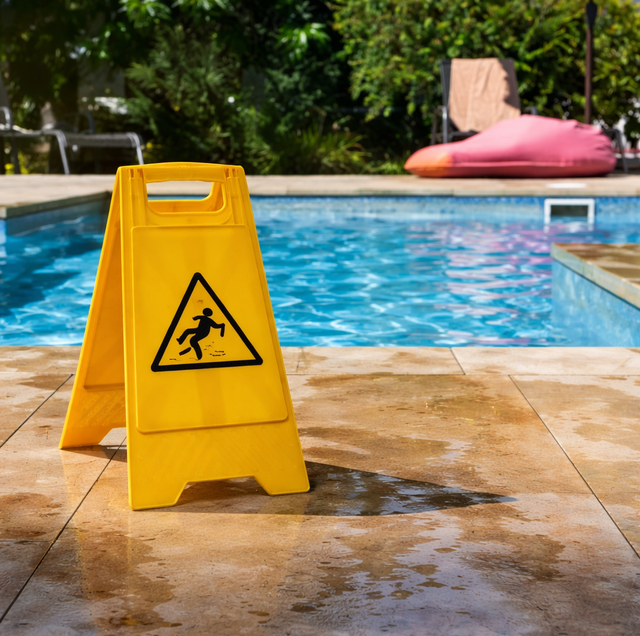
Quick Answer: Slippery patios and pool decks are usually coated in a thin biological film of algae, mildew, and organic slime that grows in shaded, damp spots and becomes slick when wet. Worn sealer and mineral deposits (efflorescence) can add to it. A gentle soft wash kills and removes the growth without roughening the surface, and better drainage, sunlight, and a slip-resistant sealer keep it from coming back.
You step onto the pool deck barefoot, the surface looks clean and dry, and yet your foot slides an inch or two before it grabs. Or you cross the patio after a light rain and nearly go down. The stone or concrete looks fine, so the slickness feels like it came out of nowhere. It did not. In almost every case, the slip is caused by something you cannot easily see: a thin biological film that has been building on the surface for weeks or months, quietly turning solid footing into a hazard the moment it gets wet.
What Actually Makes a Patio or Pool Deck Slippery
The slick you feel is rarely the concrete or stone itself. It is a living layer sitting on top of it. Algae, mildew, cyanobacteria, and other microorganisms settle onto any hard outdoor surface that stays damp long enough. They anchor into the tiny pores and texture of the material and secrete a matrix of sticky organic compounds, a substance microbiologists call a biofilm. That film binds the colony to the surface and holds moisture like a sponge.
When the film is dry, it can be nearly invisible, sometimes showing only as a faint green, gray, or black tint that most people read as normal weathering. The danger arrives with water. A biofilm is mostly water by weight, and its surface is coated in slippery polysaccharides. Add a film of rain, dew, sprinkler mist, or pool splash on top of that, and you have created a layer that behaves a lot like a thin gel coating between your foot and the ground. Your shoe or bare foot cannot reach the actual traction of the concrete underneath, because the living film is doing the sliding for it.
This is why a surface can look clean and still be treacherous. The colony is thin, translucent, and tucked into the texture of the stone. You do not register it as dirt, so you assume the surface is safe. Understanding that the slickness is a growth, and not the material, changes how you fix it. You cannot scrub the concrete into being less slippery. You have to remove the organism that is living on it.
The other two culprits: efflorescence and worn sealer: Biofilm is the main offender, but two non-living causes can stack on top of it.
Efflorescence is a chalky white or gray mineral deposit that migrates to the surface of concrete and pavers as water moves through the slab and evaporates. It leaves behind salts that create a fine, powdery layer. On its own, it is more of a dusty haze than a slip hazard, but once it gets wet, it can turn into a slick paste, and it also gives biofilm a rougher, more porous bed to grab onto.
Worn or failed sealer is the quiet one. Many decorative concrete and paver surfaces were sealed at installation, and some sealers, especially glossy film-forming types, are slick when wet by design. As that sealer thins and breaks down under UV and foot traffic, it can wear unevenly, leaving patches that shed water poorly and hold the biofilm longer. A surface that was fine for years can become slippery as its protective layer quietly gives out.
Where the Slick Growth Thrives
Biofilm does not colonize a patio evenly. It follows moisture and shade, which is why one corner of a deck can be lethal while the sunny middle stays grippy. Look for these conditions.
Shade: Areas under a pergola, a covered porch, the north side of the house, or the shadow of a fence stay damp far longer after rain because the sun never fully dries them. Shade plus lingering moisture is the ideal nursery for algae and mildew.
Poor drainage: Any spot where water pools or drains slowly gives the film the standing moisture it needs. Low spots, the base of steps, the seam where a patio meets a wall, and the gentle dish that forms in an older slab all hold water long after the rest of the surface has dried.
Under trees and heavy plantings: Overhanging branches drip long after the rain stops, drop organic debris that feeds the colony, and cast the shade that keeps everything damp. Leaf litter and pollen sitting on the surface act like fertilizer.
Near sprinklers and pools, splash: A sprinkler head that throws onto the deck, or the constant splash-out zone around a pool, keeps a band of the surface wet for hours every day. That reliable moisture supply is exactly what lets a biofilm establish and thicken, which is why the pool coping and the deck within a few feet of the water are so often the slickest zones.
The pattern holds year-round, not just in one season. Shade and standing moisture feed the growth in the cool damp months, and warmth speeds the colony up in the heat. A patio does not get a break, which is why the film keeps returning if the underlying conditions are never addressed.
Why the Slip Is a Real Danger
A slippery deck is not a nuisance to shrug off. Older adults and small children are especially vulnerable, and the film is worst exactly where foot traffic is heaviest and wettest.
The insidious part is the mismatch between how the surface looks and how it behaves. A visibly wet, mossy surface tells you to slow down. A biofilm-coated surface that reads as clean gives you no warning at all, so you walk it at full stride. Keeping the surface clean and letting it dry is not cosmetic upkeep. It is the core of keeping the area safe to walk.
A biofilm-coated deck that reads as clean gives no warning, so people walk it at full stride. Around a pool, the risk is highest, since people are often barefoot, sometimes running, and frequently wet, and a fall on wet coping can mean a head strike on concrete or a tumble into the pool.
How Soft Washing Removes the Growth for Good
Because the slickness is a living organism bonded to the surface, the fix is to kill and remove that organism, not to blast the surface into submission. This is where soft washing does what high pressure cannot.
Soft washing uses low pressure paired with a cleaning solution, typically a diluted sodium hypochlorite blend with a surfactant, that is applied to the surface, given dwell time to kill the algae and mildew down into the pores, and then gently rinsed away. Because the solution does the work of killing the colony, the water pressure only needs to lift the dead film off. The result is a surface that is not just clean but biologically reset, which is why a proper soft wash lasts far longer than a quick blast.
Why blasting the surface backfires: Reaching for maximum pressure feels satisfying, but on a patio or pool deck it often makes the slip problem worse over time. A tight, high-pressure stream can etch and erode concrete, blow the sand out of paver joints, and strip the smooth surface right off decorative or stamped finishes. That leaves the material rougher and more porous than before, which gives the next generation of biofilm even more texture to anchor into. High pressure also tends to clean the top layer while missing the colony rooted in the pores, so the green comes back fast. You end up with a surface that looks cleaner for a week, holds growth better afterward, and may carry permanent etch marks or wand stripes.
There is a safety dimension to the method too. High-pressure water is powerful enough to injure skin and eyes and to gouge softer materials, so it is not a casual tool. And on any deck that slopes toward the pool or a planting bed, the cleaning solution has to be contained and controlled so it does not run into the water or onto plants. Cleaning chemicals should always be handled per the label with proper protective equipment, and different products must never be mixed, since some combinations release hazardous gas.
The Role of Drainage, Sun, and Sealer
Removing the film is half the job. The other half is changing the conditions that grew it, so the surface stops feeding the colony.
Improve drainage: If water stands on the deck, it will keep the film supplied no matter how often you clean. Redirecting a downspout, clearing a blocked channel drain, adjusting the grade at a low spot, or simply keeping the surface swept so debris does not dam up water all cut the standing moisture that biofilm depends on.
Let the sun in: More light and airflow mean the surface dries faster after it gets wet, and a dry surface is a hostile one for algae. Trimming back branches and shrubs that cast shade and drip on the deck can meaningfully slow regrowth in the problem corners.
When resealing a deck, specify a slip-resistant sealer or have a fine aggregate additive broadcast into it. The subtle grit restores traction when the surface is wet without leaving it rough on bare feet, and it counteracts the slickness of a plain glossy sealer.
Preventing the Slick From Returning
Once the surface is clean, safe, and properly sealed, a light maintenance rhythm keeps it that way.
Clean on a schedule, not a crisis: A routine gentle wash on a regular cycle keeps a colony from ever thickening into a hazard. It is far easier to prevent a biofilm than to remove an established one, and a maintenance wash uses a milder approach than a first-time restoration.
Keep vegetation trimmed back: Cutting back the branches and shrubs that shade and drip on the deck removes both the moisture and the organic food supply, attacking regrowth at its source rather than its symptom.
Fix the water that lingers: Address the drainage, the sprinkler overspray, and the pooling spots. Every hour you shave off the surface's drying time is an hour the biofilm does not have to grow.
When the Surface Is Slick Even Though It Is Clean
One case deserves its own note, because cleaning will not fix it. A smooth-troweled concrete slab, a polished stone, or a glazed tile can be inherently slippery when wet, entirely apart from any growth. These finishes have almost no surface texture by design, so when a film of water sits on them, there is very little for a foot to grip. If your deck is truly free of biofilm and still slides when wet, the problem is the finish itself, and the answer is added traction rather than more cleaning: an anti-slip sealer with aggregate, an etched or acid-treated texture, or slip-resistant coatings and strips in the highest-traffic zones. Knowing whether you are fighting a growth or a smooth finish tells you which fix will actually work.
Frequently Asked Questions
No, they are usually different organisms. The dark streaks common on asphalt shingle roofs are largely a hardy blue-green cyanobacteria (Gloeocapsa magma) that feeds on limestone filler in shingles, while the slick green film on a shaded deck is more often true algae and mildew. Both respond to a soft-wash chemical clean, but deck algae tends to regrow faster because the surface stays wetter and gets walked on.
Household white vinegar is too weak to kill an established biofilm in the pores, and while diluted bleach can knock back surface algae, it is easy to get wrong: the wrong concentration can discolor pavers or damage nearby plants, and undiluted product left to dry can leave a residue. Critically, never mix bleach with vinegar, ammonia, or other cleaners, because the combination can release toxic chlorine or chloramine gas.
Do a quick water test on a dry day. Splash a cup of water on the suspect area and drag your shoe: if it feels gel-like or greasy and the surface shows a faint green or gray tint, it is biofilm. If the water beads oddly or the surface looks patchy and glossy in places and dull in others, the sealer is failing. Biofilm wipes away with a cleaning solution; a worn sealer does not and needs stripping and resealing.
Yes, and noticeably. A north-facing or heavily shaded surface can stay damp for many extra hours after each rain because it gets little direct sun, so algae establishes there first and thickest. A south-facing deck in open sun dries quickly and often stays grippy far longer between cleanings, which is why one edge of the same patio can be hazardous while the other stays fine.
It can. Excess pressure can blow the polymeric sand out of paver joints, which loosens the pavers and invites weeds and ants, and it can spall or pit softer coping and stamped concrete, leaving permanent marks. A blown-out joint or an etched surface then holds water and regrows algae faster, so aggressive washing can quietly create the very slickness it was meant to remove.
Once the deck has been thoroughly rinsed and allowed to dry, it is safe to walk and use normally, generally within a few hours the same day. On any deck that slopes toward the pool, a careful contractor rinses away from the water and keeps the cleaning solution contained so nothing runs into the pool, which protects both your water chemistry and the plants at the deck's edge.
Book a slip-safe deck soft wash — reclaim your footing before someone takes a fall. Superior Power Washing serves Waldorf, La Plata, and Clinton. Call (240) 901-4252.
